Caput Mortum review
FromSoftware’s Spirit with a Lovecraftian Edge

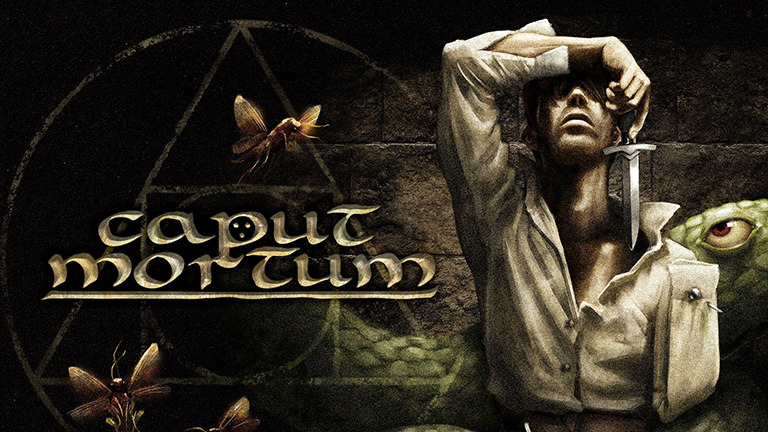
With a lineage that can be traced back to FromSoftware’s King’s Field, Caput Mortum is a welcome throwback to atmospheric, first-person exploration. Both titles place you in a labyrinthine world where survival is rooted in slow, deliberate action. But Mortum isn’t just a generic imitator. Canadian developer WildArts Games generates distinction with an emphasis on Lovecraftian horror and a deliberately off-putting, control scheme.
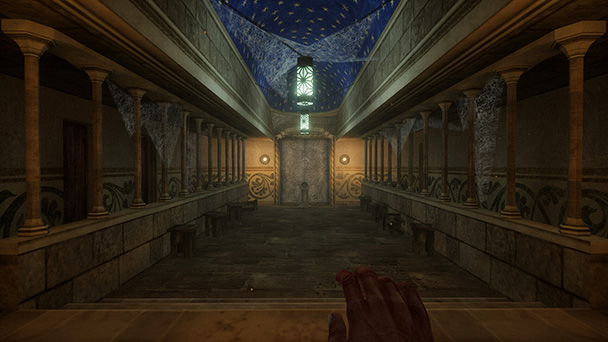
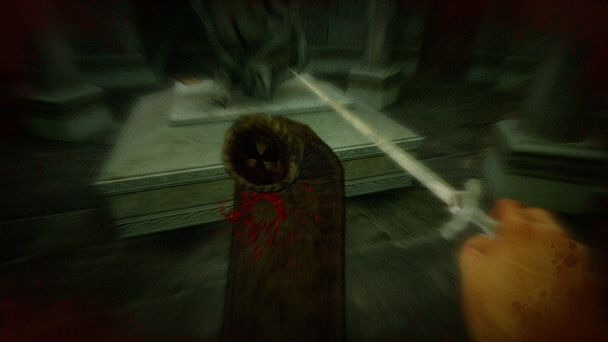
Unlike the fluid navigational systems found in most modern games, King’s Field separated movement and action, with the latter handled through an adventure-game like menu. When using it’s suggested control scheme, Caput Mortum pushes this concept a bit further. You adjust your viewing angle with the triggers and shoulder buttons while the protagonist’s single hand is controlled independently.
Unconventional Controls That Intensify Tension
Should you want a more traditional mouse-and-keyboard or first-person-style input method, Caput Mortum can accommodate. But you’ll lose the sense of susceptibility that can make enemy encounters downright nerve-racking. Remember the sense of anxiety associated with the tank controls in early Resident Evil games? Mortum is like that, sporadically breaking up its mounting sense of dread with panic as you fumble about.
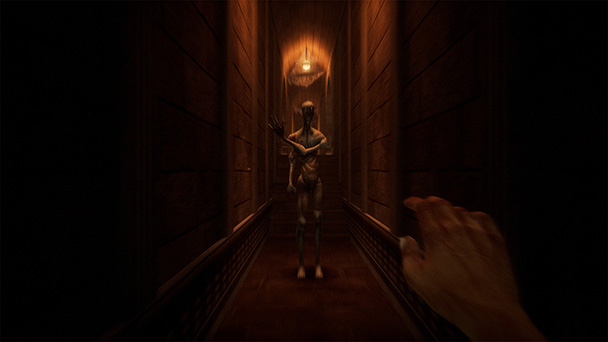
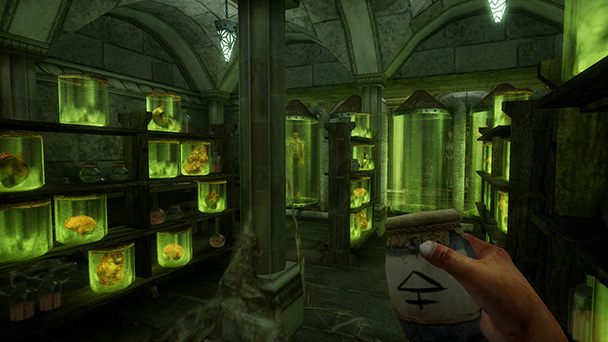
King’s Field’s world was fascinatingly cryptic, with its nebulous lore, environmental storytelling, and the oppressive sense of isolation. Caput Mortum builds on this, providing its own historical fiction. After awaking outside a 16th-century French tower jutting from a mountaintop, you’ll venture inside. An antique elevator drops you into the bowels of the cursed stronghold, where journal scraps and clues are scattered through its eerie corridors. Best of all, Mortum delivers a deliberate build-up, keeping you uncertain about what horrors or secrets you’ll discover.
Of Patience and Perception
Expectedly, puzzles are a fundamental part of the experience, requiring everything from environmental attentiveness to logical deduction. Many will probably appreciate the way solutions are telegraphed. Habitually, Caput Mortum expects you to pay attention to subtle cues that range from a tapestry hanging at an odd angle to an out-of-place relic. Rather than relying mainly on trial-and-error-based behavior, Mortum rewards patience and curiosity, making each revelation feel like a reward. Yes, you might get stuck a few times. But when this happens, it can feel like the developers expect you to slow down to truly scrutinize the game’s unsettling spaces.
Meanwhile, the low frequency of enemy encounters emphasizes a sense of fragility. Wisely, WildArts avoids turning the game into a combat-heavy slog. Instead, each confrontation feels significant, with even a single apparition capable of draining your rejuvenating resources or sending you scrambling for safety. Here, the default control scheme reveals its potential. Instead of relaying solely on reflexes, success involves keeping your composure. And without spoiling things, one of Mortum’s early threats is a particularly clever highlight, mixing childlike actions with a powerful menace.
A Concise but Effective Journey
Across the game’s three-hour journey, Caput Mortum integrates bits of historical fiction, pulling from occult legends and Renaissance-era superstitions. This blend of fact and fabrication creates an interesting setting that’s both tangible and also otherworldly. Although the game’s duration might seem brief, WildArts wraps things up just as late game enemy encounters flirt with tedium. But that’s not the only blemish. The lack of manual saves makes going down the alternative route overly cumbersome. And while the game is unabashedly old school, the option for a hint system would be welcome.
Sure, Caput Mortum may not have the scope of the games that inspired it, but its willingness to embrace discomfort makes it stand apart. By favoring stubborn controls, sparse combat, and puzzles that reward observation, this is an experience that blends classical foundations with an inventory of new ideas. Mortum’s brevity ensures it doesn’t overstay its welcome, even if the absence of manual saves and the occasional moment of tedium keep it from greatness. For players craving a descent into dread that’s draped in historical intrigue and punctuated by puzzles, don’t be afraid of giving the game a try.
Caput Mortum was played on PC with review code provided by the publisher.
Overview
GAMEPLAY - 75%
STORYTELLING - 75%
CONTENT - 70%
AESTHETICS - 70%
ACCESSIBILITY - 70%
VALUE - 75%
73%
GOOD
Caput Mortum is a brief but haunting throwback that blends intentionally clunky controls with Lovecraftian atmosphere and clever environmental puzzles. It’s occasionally frustrating, but its unnerving setting and deliberate design make it an impressive descent into the depths of historical horror.