Under the Island review
A Largely Charming Ode to Retro Adventuring

The golden age of the top-down Zelda may be long past, but a wave of indie developers has kept that flame alive with welcome dedication. Games like Tunic, Hyper Light Drifter, and Blossom Tales have each forged their own identities while paying tribute to the overhead adventure formula. Even Nintendo’s own recent forays, from the atractive remake of Link’s Awakening and the inventive Echoes of Wisdom have demonstrated that there’s still an appetite for tightly designed, secret-laden exploration.
The best of these games understand that what made the original Zelda formula special wasn’t just the swords and dungeons, but worlds that encourage curiosity, where every suspicious crack in a wall or oddly placed boulder could be hiding a reward.
Saturday Morning Cartoons Meets a Quest for Ancient Gears
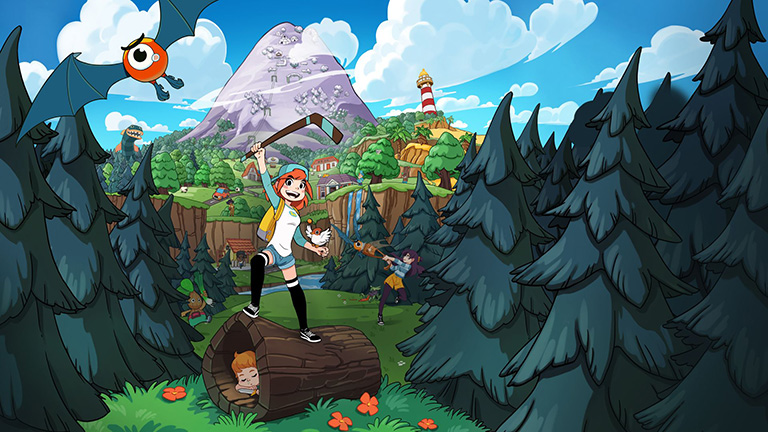
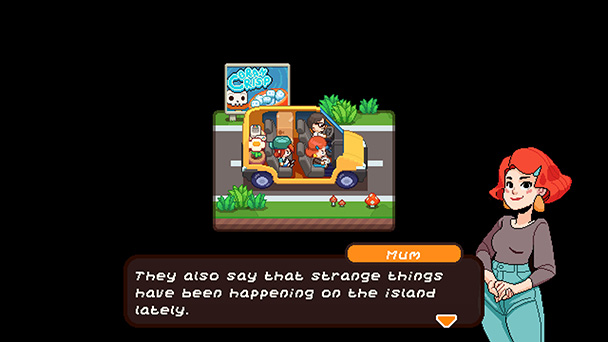
Rather than aping Nintendo’s formula wholesale, Slime King Game’ Under the Island puts its own quirky stamp on proceedings from the very first moment. You play as Nia, a headstrong teenager who has just moved to the remote Seashell Island with her archaeologist parents. After accidentally tampering with a shrine alongside her new friend Avocado (yes, that’s her name) the two tumble underground and discover that the island is sinking. The mission to recover four scattered ancient gears and save Seashell Island kicks off an adventure that showcases its ‘90s cartoon sensibilities proudly. The result can feel like a mashup of Gravity Falls and Minish Cap, which likely sparked interest from publisher Top Hat Studios.
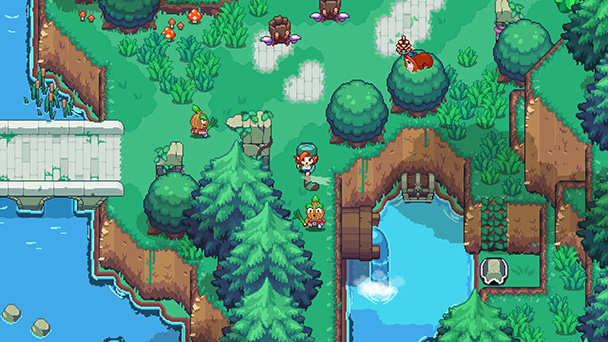
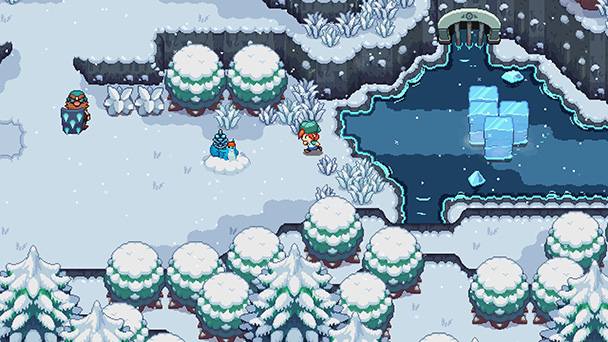
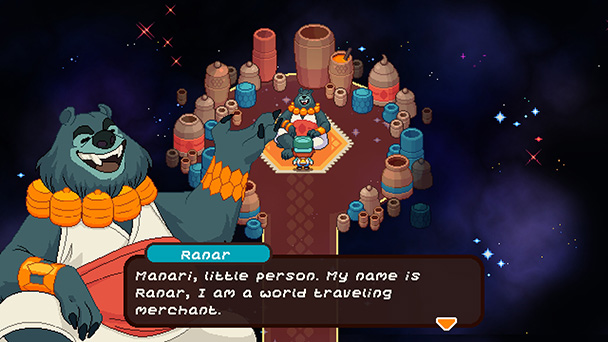
What immediately sets Under the Island apart from its peers is the game’s sense of personality. The pixel art is vibrant and brimming with personality, with each of the game’s distinct biomes carrying its own mood and visual identity, as you journey from breezy coastal stretches to mysterious underground caverns. The soundtrack embraces warmth and curiosity more than epic grandeur, keeping things breezy even when the stakes rise.
Sun, Secrets, and Some Suspiciously Pushable Boulders
The game’s humor is another genuine delight. Boss encounters flirt with absurdity, like surviving a gauntlet to protect a performing star from an overwhelming crowd of fans or winning a cooking competition. These moments feel fresh and imaginative in a genre that can sometimes take itself too seriously.
Another highlight is Under the Island’s world design and puzzle construction. The interconnected map contains 40 distinct areas that are densely packed with secrets, hidden passages, and puzzles that remix classic Zelda conventions in clever and sometimes unexpected ways. The game’s items, which include a fireball-shooting plant that spreads fire to nearby objects, and treat bags that can lure animals onto switches, are used creatively throughout, rewarding experimentation. That said, the narrative struggles to keep pace with the world around it. Many of the island’s inhabitants feel more like quest dispensers than convincing characters, and the sheer volume of dialogue layered on thin characterization is a misstep. After seeing how effectively games like Tunic tell their stories with minimal text, it’s clear that Under the Island might have benefited from a more restrained approach.
A Short Stay in the Penalty Box for Sticking
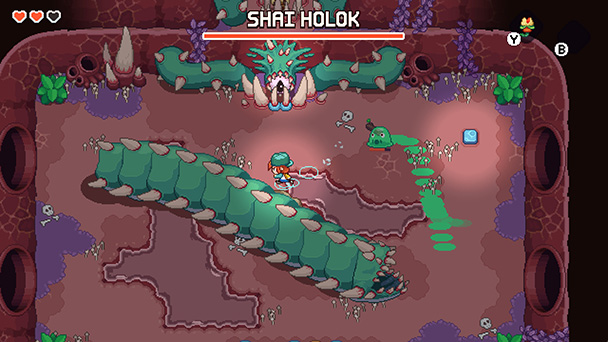
The game’s most persistent stumbling block, however, is its combat. Nia’s hockey stick is an endearing weapon choice, but in practice it can feel cumbersome, particularly in the earlier hours. Enemies are spongy, forcing you to hack away repeatedly at even the weakest foes, and Nia lacks any meaningful defensive options. Without a dodge roll or shielding players have to absorb damage during muddled encounters.
Weapon upgrades do eventually make combat feel more satisfying, but they require significant material grinding and arrive after much of the game has passed by. The last boss in particular is a notable difficulty spike that some players will find genuinely punishing, offering a jarring shift for a game that otherwise keeps things approachable and breezy. The gap between the game’s gentle puzzle design and the demand of this final encounter may leave some feeling frustrated. It ended an otherwise good game on a down note.
What’s an Island Vacation Without a Few Blisters?
Under the Island might not be a perfect game, but it is an enjoyable one for most of its playtime. At somewhere between seven and fifteen hours depending on how thoroughly you explore, it respects your time in a genre increasingly dominated by sprawling open worlds. Its rough edges, from cumbersome combat, thin characterization, and an occasionally demanding final stretch are noticeable, but they rarely overshadow the genuine warmth and inventiveness at the core.
For anyone who grew up loving Link’s Awakening or The Minish Cap and has been waiting for an indie game to recapture some that magic, Under the Island comes closer than almost anything else in recent memory. Slime King Games has made an impressive debut, making a stay on Seashell Island worth recommending.
Under the Island was played on PC with review code provided by the publisher.
Overview
GAMEPLAY - 80%
CONTROLS - 75%
CONTENT - 80%
AESTHETICS - 80%
ACCESSIBILITY - 80%
VALUE - 80%
79%
GOOD
Under the Island is a breezy, personality-packed throwback that captures the curiosity and charm of classic top-down adventures, wrapping clever puzzles and Saturday morning cartoon energy into a tightly paced quest. Some clunky combat and an uneven finale hold it back from greatness, but for most of its runtime it’s a warm, inventive island escape that retro fans should happily enjoy.





Do they explain why is she named Avocado?