Spellbound by the Simulation: Transport Fever 3
A Masterful Exploration of Transit and Supply Lines

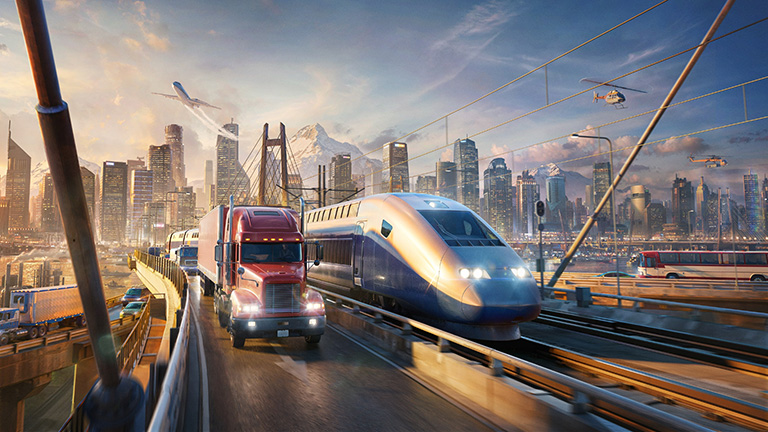
Six years ago, I sank an embarrassing number of evenings into Transport Fever 2, meticulously laying rail across continents and tweaking bus routes until every last town trickled toward into profitability. Dozens of strategy, management, and simulation games later, stepping into Transport Fever 3 felt like reopening a dusty old college textbook. Yes, the fundamentals were familiar, but my memory wasn’t. I initially stumbled over the UI, not because it’s unintuitive, but because I’d genuinely forgotten how to create proper line routes for trucks, trains, and service vehicles. There’s a particular humility in relearning systems you once mastered.
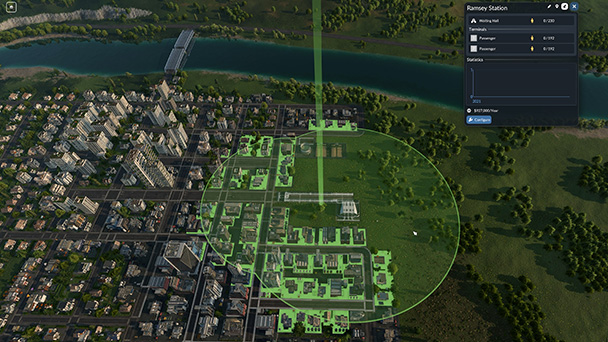
Once I reacquainted myself with assigning vehicles to lines and setting up cargo loops, the rhythm came rushing back. Create a depot. Buy the vehicle. Establish a line. Assign stops. Connect industries. Watch the economy breathe. The interface still prioritizes clarity over flash, surfacing detailed vehicle data from driver stats, speed, condition, assigned route, even happiness all with a simple click on a carriage. It’s dense, yes, but comfortably so once you settle in. But most important of all, it stays out of your way until you need it.
What truly surprised me, however, was how much Transport Fever 3 leans into storytelling. The recent preview build that I play opens with a campaign structured around eight missions spanning eras and continents, from Mardi Gras in 1906 to a rocket launch in Tanegashima in 2033. This isn’t just about profit margins anymore; it’s about place, personality, and historical content, a deft response to player feedback.
A Story Beneath the Steel
The first mission, Mardi Gras, 1906, unfolds in the aftermath of a major storm as New Orleans prepares for the festival. You’re tasked with generating revenue quickly enough to “Save Mardi Gras,” while juggling a secondary objective that has you subduing local alligators. Yes, really. The tutorial cleverly uses the alligator-catching objective to teach camera movement and terrain navigation, turning what could have been dry onboarding into something playful and memorable.
Narrative tension emerges through characters like Katie Baker, who highlights the friction between raw revenue generation and social benefit. Do you prioritize profits, or invest in infrastructure that stabilizes the community long-term? Bauregard LaFontainte and his assistant Andrew anchor the mission with surprisingly decent voice acting and period-appropriate music. Their exchanges give context to what would otherwise be straightforward logistics puzzles, which I really appreciated.
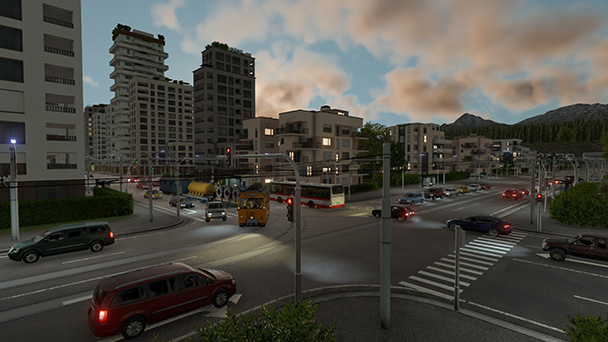
Mechanically, Mardi Gras blends restoration and expansion. You rebuild a bridge into town, repair damaged roads, and establish supply lines—such as linking a logging camp to a hotel construction site. Sending a wagon off to its destination feels purposeful because you understand who’s waiting on the other end. Even small touches, like buildings automatically rotating for optimal placement, streamline construction without sacrificing player agency.
That agency appears in subtle decisions, too. To supply gumbo production, you construct a warehouse and choose between sourcing shrimp or fish. It’s not a sweeping moral dilemma, but it reinforces the sense that you’re shaping a living economy rather than simply optimizing spreadsheets. Smart UI icons nudge you in the right direction without erroring on hand-holding, striking a smart balance between guidance and autonomy.
Small Decisions, Big Satisfaction
Later, the 1969 Woodstock mission shifts the tone dramatically. Here, you’re coordinating transport for a cultural flashpoint, juggling rural infrastructure and a tidal wave of concertgoers. Characters like the Sheriff, promoter Bart Korner, Producer, and even a free-spirited spectator named Sun Flowers frame the logistical challenge in human terms. It’s less about raw industry and more about managing chaos, expectations, and spectacle as you deal with food and waste at the emerging campground.
The broader campaign promises variety: Alpine Crossing in 1920, Wadi Rum in 1956, Norway’s oil rush in 1971, construction in Manila in 1999, city growth in Adelaide in 2015, and the aforementioned Japanese rocket launch in 2033. Each scenario hints at distinct mechanical twists layered over the familiar transport sandbox. If Mardi Gras and Woodstock are any indication, historical context won’t just be cosmetic but will shape objectives and constraints in significant ways.
Speaking with Urban Games’ Nico Heini revealed that the 26-person team is crafting something quite special. Heini understands that Transport Fever’s audience is split between two camps: the spreadsheet savants who optimize every freight route for peak efficiency, and the daydreamers who just want to watch their cities hum to life. His team is determined to serve both. The simulation depth remains gloriously intact for veterans who crave fastidiousness, but quality‑of‑life updates and a gentler campaign curve make the experience more inviting to newcomers.
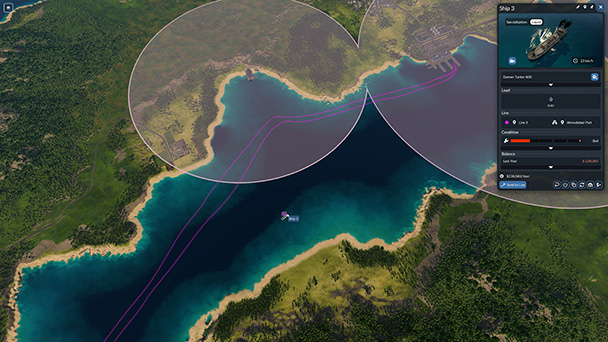
Most importantly, Heini emphasized a continued commitment to the modding community, the passionate hobbyists who have kept the series evolving between releases. Tools for sharing custom vehicles, maps, and scripts will remain fully accessible, meaning the same creative energy that fueled Transport Fever 2 will keep the game running well beyond launch. It’s a rare balance: sophisticated but not exclusionary, rich with data yet endlessly playful; a transport empire open to anyone willing to lay the tracks. I walked away in awe not only of the simulation but just how perceptive a mid-sized team could be.



I noticed TF2 has $10 worth of DLC, which was various vehicles. How much will be in TF3?