The Story of MOSS – Raiden, Remix, and the Future of STG
A Q&A With MOSS CEO Toshinobu Komazawa

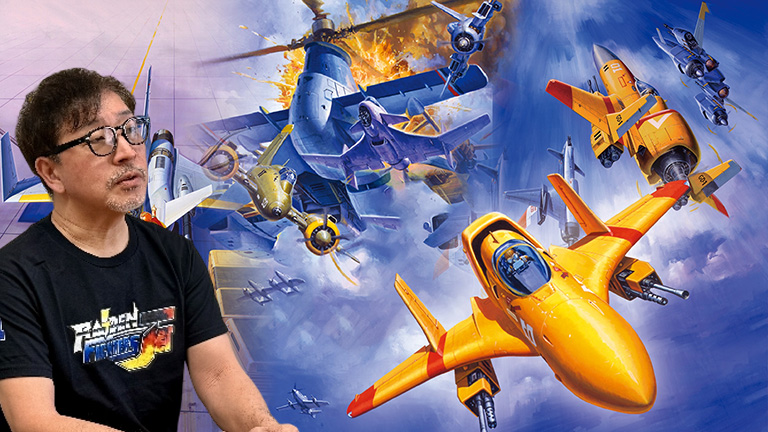
For more than three decades, the Raiden series has stood as one of the defining pillars of the shoot ’em up genre, its thunderous weaponry and relentless pacing helping shape the arcade era of vertical shooters. Today, the legacy of that lineage continues through MOSS, the studio that inherited the creative DNA of Seibu Kaihatsu and remains closely tied to the franchise’s history.
In this interview, MOSS CEO Toshinobu Komazawa reflects on the early development of Raiden, the studio’s design philosophy, the newly arranged music featured in the Raiden Fighters Remix Collection, and the challenges of bringing classic arcade experiences to modern platforms.

Tech-Gaming: MOSS carries on the legacy of Seibu Kaihatsu. Do you still have any of the original design documents or related materials from that time in your archives?
Toshinobu Komazawa: Many materials are no longer preserved even at Seibu Kaihatsu itself, so MOSS is only able to share a portion of the materials that remain.
T-G: If there are any insights you can share about the early titles in the Raiden series, we’d love to hear them.
TK: What stands out to me about the development of the original Raiden is how much we focused on realism, including in the graphics. We conducted location tests many times, studying how players actually played the game and making adjustments accordingly. We also carried out tests in various countries around the world and made adjustments for each region. Those are some of the things that stand out to me. At the time, I think it was quite rare for a title to go to such lengths.

T-G: When discussing the lineage of the STG genre, titles such as R-Type, Gradius, DoDonPachi, and Raiden are often mentioned. Are there any other titles you feel absolutely belong on that list?
TK: This is just my personal opinion, but I think Ultimate Tiger (Twin Cobra) and Darius are indispensable.
T-G: The Raiden Fighters Remix Collection includes music by Soshi Hosoi, Yuki Arai, and Kazushi Tsurukubo. How did you approach selecting and organizing the new arrangements?
TK: Go Sato, who also worked on the original arcade soundtrack, served as the producer and selected arrangers who would be the best fit for RAIDEN FIGHTERS, RAIDEN FIGHTERS 2, and RAIDEN FIGHTERS JET.

T-G: Were the musicians given complete creative freedom, or was the process more collaborative?
TK: For the arranged versions, each arranger (Soshi Hosoi, Yuki Arai, and Kazushi Tsurukubo) was given as much creative freedom as possible, and completed their work while coordinating with Go Sato, who was also involved in the original compositions.
T-G: Raiden II and its spinoff titles were released when the internet was just beginning to spread widely. As a result, the Plasma/Proton Laser ended up with several nicknames, such as “toothpaste,” and even one I coined myself, “Electric Boa.” Could you tell us a bit about how that weapon came to be?
TK: The Plasma Laser (its official name is simply Plasma Laser) was created through ideas proposed by the staff responsible for programming and game design on Raiden and Raiden II, along with other developers at Seibu Kaihatsu at the time.
One of the main goals for Raiden II was to introduce a new weapon that didn’t exist in the original game. It wouldn’t be a laser focused on a single point, nor a wide-area Vulcan-type attack. Creating a weapon that felt new both visually and in its effect was the main objective for Raiden II. In the end, the programmer’s sense and technical skill came up with the Plasma Laser with a beam that seems to cling to enemies.

T-G: The Raiden Fighters Remix Collection includes both the original Japanese versions and the overseas versions. There are differences such as stage layout changes, enemy balance adjustments, and the addition of second-loop elements in Raiden Fighters and Jet. Could you explain the motives behind these variations?
TK: In short, this was because Seibu Kaihatsu adopted a marketing approach of creating ROM versions tailored to the player skill levels and play environments of each country. The price per play also differed from region to region, which played a role as well. Seibu Kaihatsu conducted location tests in each country, made adjustments where necessary, and produced ROM versions that best suited each local market.
T-G: While reviewing the Raiden Fighters Remix Collection, I noticed that the gameplay speed felt noticeably faster. Compared to the arcade PCB, the shift from 54 fps to 60 fps speeds up the overall tempo and affects the precise rhythm that the Fighter series is known for. Are there plans to address this?
TK: When developing this port, MOSS aimed to deliver the best possible experience on modern consoles. However, we recognize that at launch we did not fully meet some players’ expectations, and we sincerely regret that. We are currently working on a patch that will run at 54 fps. The update schedule has not yet been finalized, but we plan to announce it in the near future. Please stay tuned for further updates. Internally, we are also reviewing other areas for improvement based on player feedback.

T-G: I also noticed that changing the difficulty setting didn’t seem to affect the speed of enemy bullets. Is that an intentional design choice?
TK: It is likely an intentional difficulty setting based on the characteristics of the original game. That said, this is another area that may be reviewed for improvement based on player feedback.
T-G: In Raiden NOVA, the traditional vertical scrolling shooter format evolved into a free-movement style similar to Vampire Survivors. Has there been any discussion about creating a traditional numbered Raiden title again?
TK: Yes, that’s something we discuss all the time. However, to do that properly we need to come up with a weapon that feels like Raiden, but is still something new, so it may take a bit more time.

T-G: Over the years, you’ve expanded beyond the STG genre into areas such as VR game development and collaborations with pachinko and pachislot manufacturers. How do you maintain balance across such a wide range of projects?
TK: By engaging with a wide range of genres and types of content within the entertainment field—things that are “exciting” and “fun”—both the company and our staff can broaden their knowledge, make new discoveries, and generate new ideas more easily. I believe the key is having experienced core staff members in each genre, which helps maintain a good overall balance.

Love the focus on STGs recently especially with classics and ones inspired by classics.
Any time estimate for the framerate fix?