Q&A with Full Metal Schoolgirl’s Nobuyuki Okajima
Of Laser Beam Eyes, Production Duties, and the Absence of Satire

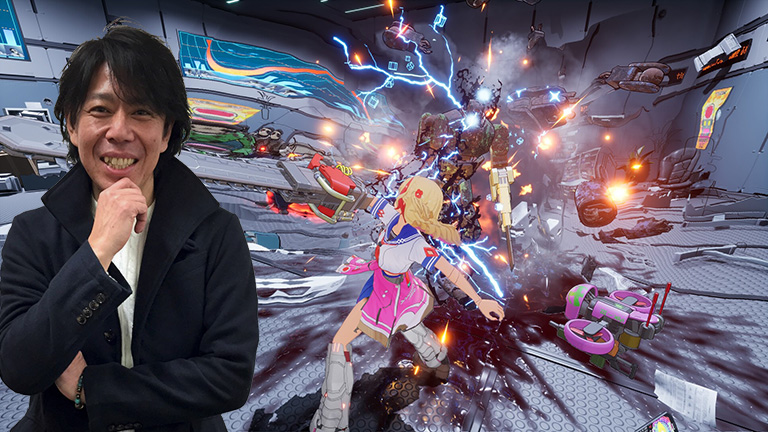
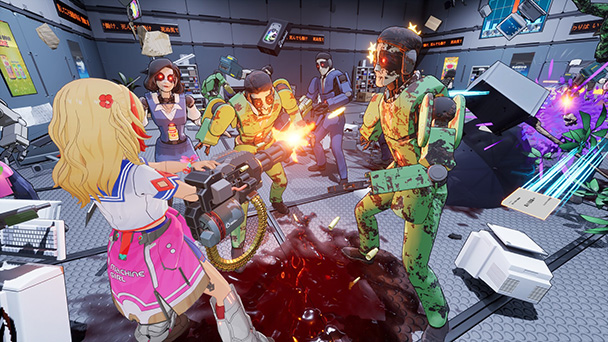
Producer Nobuyuki Okajima has built his career on bold ideas and even bolder execution, and Full Metal Schoolgirl might be his most unpredictable project yet. Combining over-the-top action, stylized satire, and a gleeful disregard for convention, the game transforms chaos into an art form. In this interview, Okajima discusses his creative philosophy, his partnership with YUKE’S, and how a decades-old idea evolved into one of the year’s most eccentric releases.
Tech-Gaming: Can you explain the duties of the lead producer and your philosophy toward the developmental process?
Nobuyuki Okajima: My job is to act as something of a jack-of-all-trades in our quest to create a good product that our customers will buy (and realize a profit for our business). One of the most important roles I play in the development process is deciding on the direction of the product and identifying our target audience. Creating a game that our players will enjoy is crucial, but I think that making sure the developers enjoy themselves while making the game is just as important. So, my job is quite simple, and mostly involves saying three things: “Nice,” “I see,” and “Good, do more!”
T-G: How did the idea for Full Metal Schoolgirl first come about, and what inspired the game’s boisterous blend of comedy and chaos?
NO: The idea for creating a game about mechanized girls with weapons implanted in their bodies has been around since I was predominantly making games for the PS2. We never really had a chance to implement it, but I pulled this idea out of my stockpile and proposed it to the creators at YUKE’S when we began working with them. As I explained in the previous answer, my job involves deciding on the direction of a product and identifying target audiences, so once that part’s done, all I say is “Nice,” “I see,” and “Good, do more!” Before I realized what was happening, we ended up with a game that fuses rowdy comedy with chaotic action.
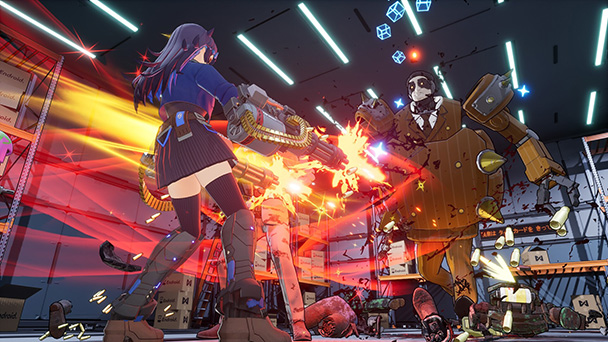
T-G: A playthrough produced plenty of laughs, from the protagonist protecting her modesty when climbing stairs to Professor Hakase’s passion for hands-on augmentations. Was there ever a darker or more serious version of Full Metal Schoolgirl before it embraced its playful tone?
NO: Huh? We always take game development extremely seriously (laughs!). The story is about a pair of young girls who love their father so much that they are willing to become cyborgs in order to avenge him, and it makes me think of tearjerkers like the movie A.I. I can’t think of a more serious plot. I’m actually curious as to what part of this game could possibly strike you as comical?!
T-G: The game’s exaggerated depictions of authority, discipline, and burnout seem to offer a bit of subdued commentary on Japan’s corporate “black company” (or burakku kigyō) culture. Did the writers ever discuss their motivations behind this?
NO: This game is a complete work of fiction that asks, “What if the customs and attitudes of the Japanese bubble economy (the late 80s) continued into the future?” It includes no messages about satirizing society and is merely a collection of elements that we found fun and moving.
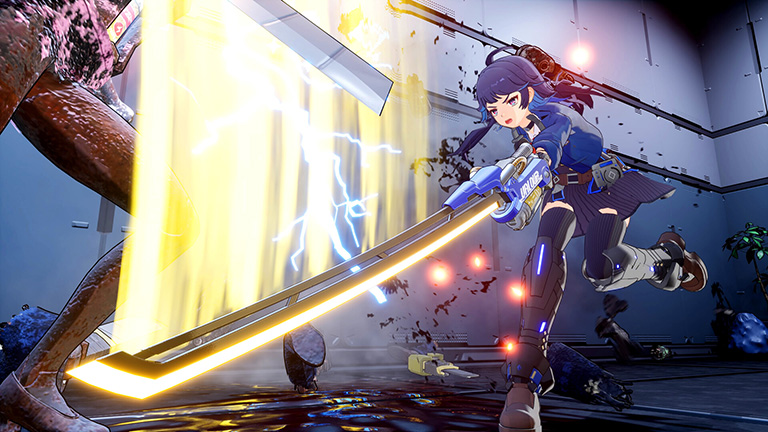
T-G: Were there ever any concepts considered “too wild” for inclusion, even for a game this chaotic?
NO: No, there weren’t, and even if there were, I couldn’t talk about them here (laughs).
T-G: The concept of simulating a livestream, complete with viewer comments, was a clever touch. Where did this idea stem from?
NO: This idea came from the young minds of the creators at YUKE’S. It’s a fantastic idea, one that a middle-aged man like myself would never be able to come up with. The words I used in response were “Nice” and “I see.”
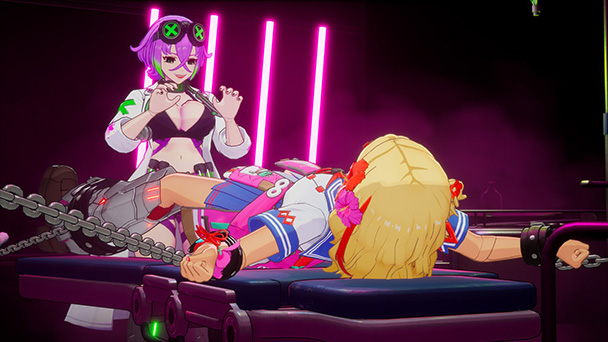
T-G: The game’s visual style blends cell shading and vibrant colors, with just a bit of military grit. How did the team decide on this art style?
NO: When it came to the graphics, we decided on a direction that avoided the moe elements of bishojo games without employing visuals that were overly sexual or grotesque.
T-G: What was the biggest production challenge your team faced during development?
NO: We faced a number of challenges during development, such as technical trial and error and issues with the visuals, but the biggest hurdle we faced was adapting to the release of new hardware in the form of the Switch 2, which was announced during development of the game.

T-G: One of the game’s most contentious elements is the consumable keys used to access the Meternal Jobz building’s uppermost floors. Did you ever consider relaxing this requirement?
NO: As you know, Meternal Jobz is a company with insanely tight security, so the existence of keycards that expire after a single use is unfortunately unavoidable. The keys are a form of tribute players must pay to the floors they reach, and the fact that they will disappear after use is precisely what makes them valuable. Even if a keycard disappears, this game includes plenty of elements that make the climb up the building worth doing all over again.
T-G: If you had the opportunity to provide a sequel to Full Metal Schoolgirl, what kinds of additions and changes would you include?
NO: I can think of many things, but… I guess I would say laser beam eyes and teeth that turn into missiles…





Serious question get not serious answers.
Nice!
Good, do more!