Fortuna Magus Review
A Modest Retro JRPG with a Bit of Heart

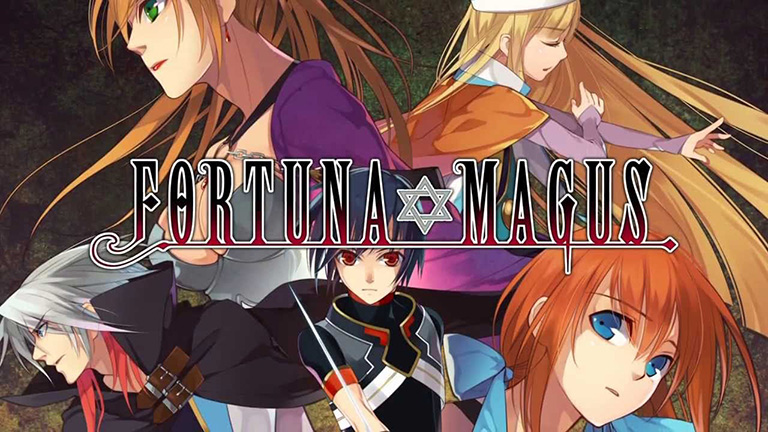
If you’ve played a few KEMCO mobile RPGs, you probably already know what you’re getting with Fortuna Magus. Developed by WorldWideSoftware (Legend of Ixtona, Silver Nornir) and originally released onto mobile devices back in 2014, the title doesn’t deviate too far from the publisher’s catalogue of modest, retro-inspired JRPGs.
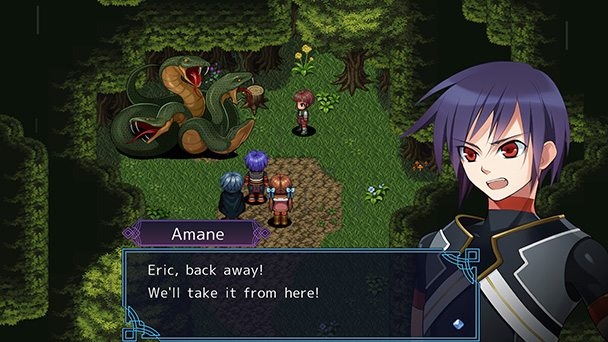
The game’s story follows Amane, his adopted sister Tia, and their younger sibling Lill, whose father mysteriously disappeared years ago. When the three cross paths with a persecuted magus, they’re swept up in a world where magic-users are hunted, family secrets run deep, and fate seems determined to make everyone miserable. Sure, it’s a setup that revisits familiar genre beats, but the writing sporadically shows more heart than you might expect, including a true ending that borders on being genuinely touching. And that’s a bit of a rarity with KEMCO’s cookie-cutter approach.
Functional Visuals, Familiar Foundations
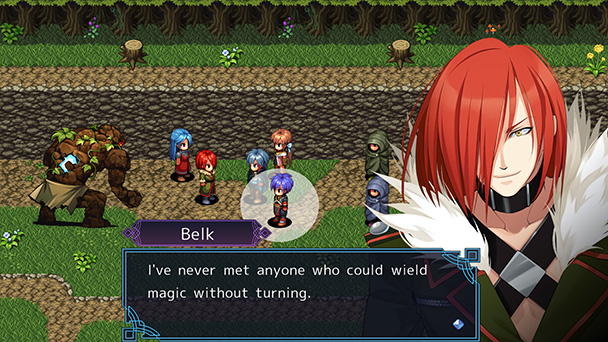
Visually, Fortuna Magus doesn’t veer far from the publisher’s typical output, so it’s pretty humble by modest standards. The sprite work evokes the look of a mid-tier Super Nintendo RPG, and comparisons to RPG Maker games are inevitable. Enemies are small and static, lacking the animation and personality that characterized even budget titles of the 16-bit era.
Followers of KEMCO’s output will find little here that distinguishes Mangus from something like Alphadia or Dead Dragons, though the environments do nurture some basic charm. The game makes no attempt to dazzle and clearly wasn’t designed to. Fortuna Magus is retro by philosophy, not just by budget.
Elemental Customization is a Highlight
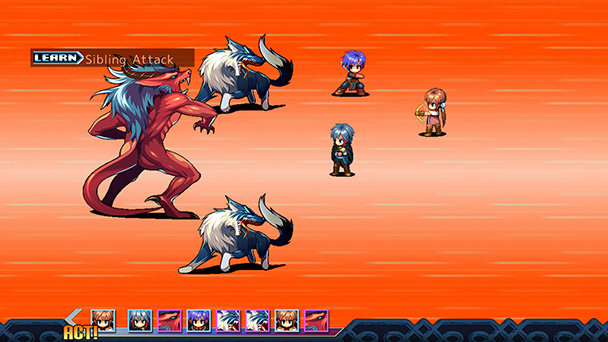
The title does attempt to distinguish itself through its magestone system, which serves as the game’s primary progression hook. Throughout your adventure, you’ll collect elemental magestones that correspond to different magical affinities. Assigning these stones to your characters gradually unlocks new abilities and devastating special attacks tied corresponding elements.
As such, pouring fire magestones into a character doesn’t just nudge a number upward. Instead, it shifts what that character is capable of doing in battle, opening up skills that can completely change how you approach a tough encounter. It’s a system that’s simple enough for newcomers to wrap their heads around while role-playing veterans might find it just rewarding enough to encourage scavenging around every corner.
Magestones and Straightforward Combat
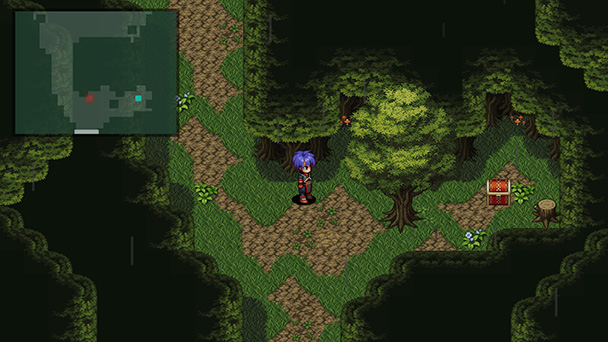
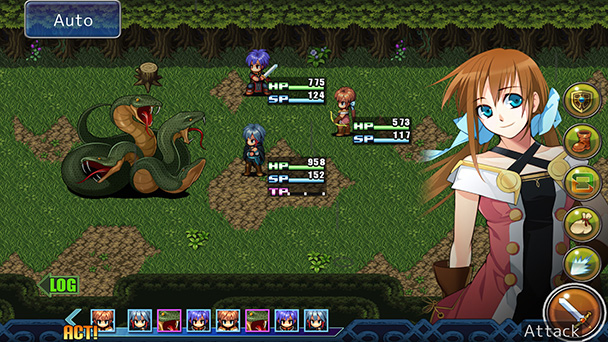
That elemental power-up loop feeds directly into the turn-based combat, which is straightforward by even KEMCO’s straightforward standards. Battles are menu-driven dealings with your party of up to five characters arranged in a fixed formation on a small grid. You’ll select attacks, skills, and spells from a list, watch the animations play out, before moving on.
Pleasingly, there’s an auto-battle option for the routine encounters that make up the bulk of the game, which can help offset the tedium. But compared to some of the publisher’s other efforts, such as the crafting and equipment skill systems found in Alphadia Genesis, Fortuna Magus keeps things bare-bones, which will feel either feel refreshingly clean or disappointingly thin depending on what you want from the game.
A Compact Adventure with Several Issues
But Fortuna Magus isn’t without some troubling shortcomings. A full playthrough, including side quests, will still come in under ten hours. And outside of the magestone system, there isn’t much room to shape how your characters grow. Equipment progression amounts to visiting the shop and buying the next tier of weapon or armor with little nuance involved.
Meanwhile, skill acquisition is tied to a random chance system that triggers when using abilities in battle, which means meaningful upgrades can feel out of your hands. Some players will breeze through the story never quite feeling in control of their own build, and that lack of agency feels like a true weakness compared to KEMCO’s deeper titles.
Small-Scale RPG Comfort Food
Despite these deficiencies, Fortuna Magus manages to be a pleasant, undemanding RPG that delivers more charm than its production values might suggest. The story does more with its allegorical elements than expected, and the main characters are likable. It won’t win over anyone looking for a deep or lengthy RPG, but for players who want something compact, accessible, and built around JRPG convention, Fortuna Magus mostly delivers what it promises.
Fortuna Magus was played on PC with review code provided by the publisher.
Overview
GAMEPLAY - 65%
CONTROLS - 70%
CONTENT - 65%
AESTHETICS - 65%
ACCESSIBILITY - 70%
VALUE - 70%
68%
OK
Fortuna Magus is a compact, retro-inspired JRPG that sticks closely to KEMCO’s familiar formula but elevates it with a surprisingly heartfelt story. While its magestone system adds a welcome layer of customization, the short length and limited character progression keep it from feeling truly special.





“Fortuna Magus” seems to be a combination of two distinct terms. Fortuna, derived from Latin, refers to the goddess of fortune and luck in Roman mythology, symbolizing the unpredictable nature of life and chance. In contrast, Magus refers to a magician or sorcerer, often used in fantasy settings to describe a wise, powerful practitioner of magic. The combination of these words, Fortuna Magus, could suggest a character or concept embodying the power of luck or fortune combined with magical prowess.
Thanks, bot. Now begone!