Wizard of Bug review
The Joy of Stealing Hearts


Sokoban has justified its place in the puzzle game pantheon. For decades, the concept has challenged players with prudently pushing around boxes across tight grids, providing one of the best cerebral workouts around. Naturally, the simple elegance associated with methodical arrangement has inspired a myriad of variations over the years. Doujin publisher Sanuk’s Wizard of Bug is the latest game to riff on Sokoban formula, contributing several innovations to the classic box-pushing test.
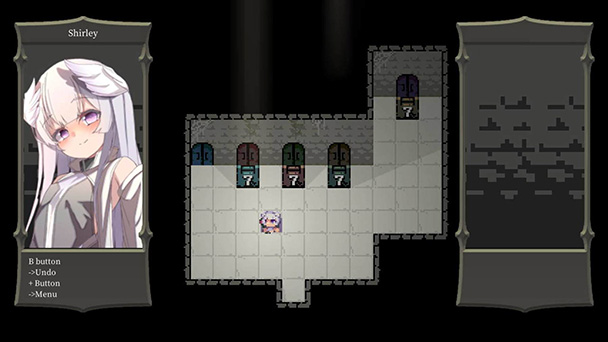
The Wizard of Bug retains the grid-based movement of Sokoban but replaces the traditional boxes with colored hearts representing a character’s life force. As such, players must manipulate these hearts by combining, moving, and even changing their color to defeat all the enemies on each stage. The shift from fixed objects to dynamic, color-changing ones adds an additional layer of complexity to already challenging pastime. As such, if you’re easily frustrated by Sokoban, you might want to avoid tangling with Wizard.

From Fogime, Creators of Witch’s Rhythm Puzzle
The game’s protagonists also endow the game with distinction. Each heroine possesses unique abilities, with Shirley able to manipulate a life force directly, while Ella can change its color. Sporadically, players switch between them to solve increasingly intricate puzzles. This dual-character system introduces another wrinkle that intensifies Wizard of Bug’s headscratchers, while adding a bit of interplay between the characters.
Despite some thorny logical challenges, the game includes several welcome amenities. Undoubtedly, the potential for getting stuck on a puzzle is high. But the developers offset this with a generous rewind system and optional hints. In execution, these inclusions encourage experimentation while minimizing the penalty for failure. And you’ll definitely want to try out different approaches. Although Bug provides a succinct overview of the game’s fundamentals, most lessons are gradually gleaned across the main campaign’s succession of 100 stages.
A Plethora of Puzzles
Pleasingly, Wizard of Bug complements its main campaign with over 500 procedurally generated puzzles as well as a level editor. Although the ability to share stages with other players would have been worthwhile, there’s no support for sharing your own creations, which does feel like a missed opportunity.
In addition to its innovative mechanics and robust content, Wizard of Bug’s aesthetics conveys retro charm. Sure, the pixelated sprites might seem unsophisticated, but the game’s modest graphical style ensures there’s no visual ambiguity. And that’s important, because you’ll probably spend hours scrutinizing the game’s playfields, as you contemplate solutions. That said, the detailed portraits of Shirley and Ella that border the playfield provide Wizard a bit of personality. Meanwhile, the game’s soundtrack simmers with percussive glitch-beats, injecting just a bit of urgency into the proceedings.
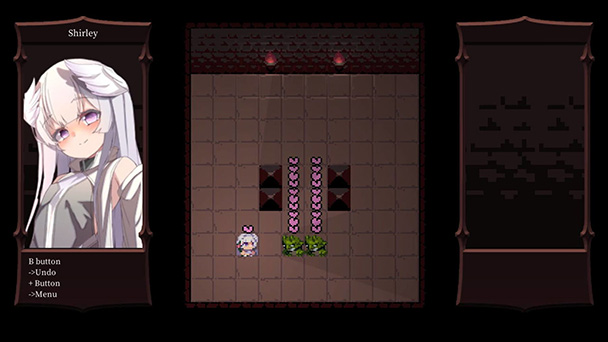
Wizard of Bug’s heart manipulation and character switching could have easily grown cumbersome. But the game’s gradual roll-out of different mechanics helps to push again tedium and ensure the progression rarely feels unfair. Even when a stage stumps you for a while, the eventual “aha” moment is deeply satisfying, as Wizard coaxes you into absorbing its logic.
Wizard of Bug was played on Switch with review code provided by the publisher.
Overview
GAMEPLAY - 75%
CONTROLS - 70%
AESTHETICS - 70%
ACCESSIBILITY - 65%
PERFORMANCE - 75%
VALUE - 80%
73%
Good
Wizard of Bug casts a clever twist on Sokoban by swapping out boxes for color-changing hearts and tossing in dual-character puzzles that really make you think. It can be tough, but with smart design and a handy rewind system, the game keeps things challenging while minimizing frustration.





No contest for this one?