Varlet review
Stimulating Social Commentary Undermined by Nearly Everything Else


When you first step into Varlet, it’s impossible not to be reminded of Persona. Both center on a group of high school students caught between daily life and an otherworldly crisis. But whereas Persona’s Metaverse and Midnight Channel plumb the collective unconscious, Varlet’s psychology is habitually rooted in the apprehensions of a contemporary, always-online generation.
Here, classmates disappear into nightmarish realms produced from their wayward hopes and desires. As a new student at the prestigious Kousai Academy, you’re quickly recruited by the Student Support Services (or SSS) guild to help with these issues. You soon discover that cliques divide the school, generating quite a bit of work for the team.
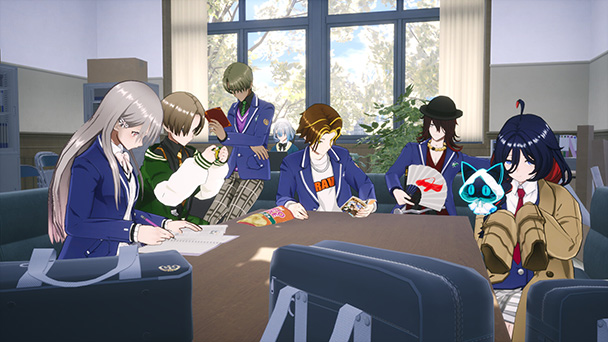
Although there are several obvious similarities with Atlus’ franchise, Varlet isn’t just a copycat. From bullying, alienation, loneliness, and egotism there’s plenty of mental dysfunction brimming in Kousai’s student body. Undoubtedly, that’s a remarkably relevant premise, given the amount of research that links social media with a worrisome uptick in social anxiety. But when Varlet isn’t focusing on this premise, it can feel often like a chore.
School Life, Stats, and Save Scumming
During the day, you manage your class schedule, club activities, and interactions with peers. Expectedly, each of these undertakings feeds into a determination of social connection as well as psychological assessment. It’s likely designed to encourage cautious choices, feeding a bit into your combat effectiveness, most mostly toward the game’s multiple endings.
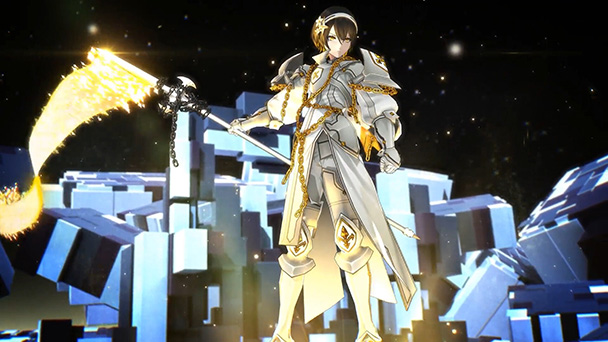
But here’s the thing: all too often Varlet’s stat changes can be difficult to predict. Other times, you’re forced to decide between two equally disappointing choices depending on the protagonist’s psychological leanings. Several times, I was tempted into save scumming, after feeling that Varlet’s assessments were too arbitrary and didn’t accurately reflect my selection.
Fighting (Generic) Demons
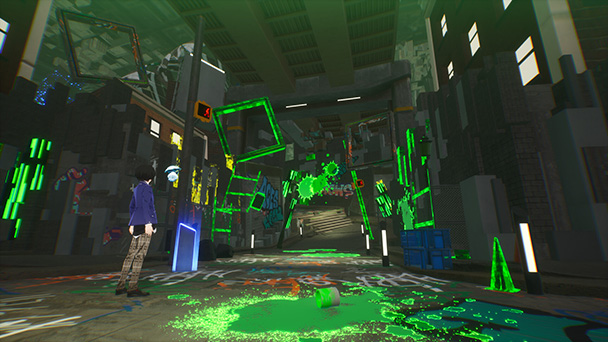
Varlet’s dungeon explorations send you into surreal spaces that reflect unresolved personal struggles. But unlike Persona5 ’s expansive palaces, these areas are small, self-contained, and dotted with simple puzzles. On one hand, their streamlined design ensures you’ll quickly return to main narrative, allowing Varlet to preserve its focus. But on the other hand, brevity can make the exploration of each student’s psyche feel underdeveloped. Here, trauma is told rather than rendered or implied, while the same half-dozen basic foes you fight offer little symbolism.
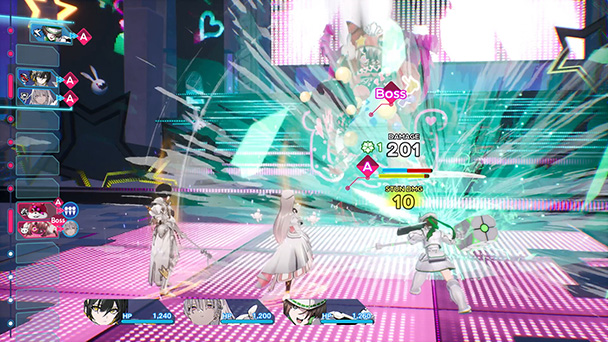
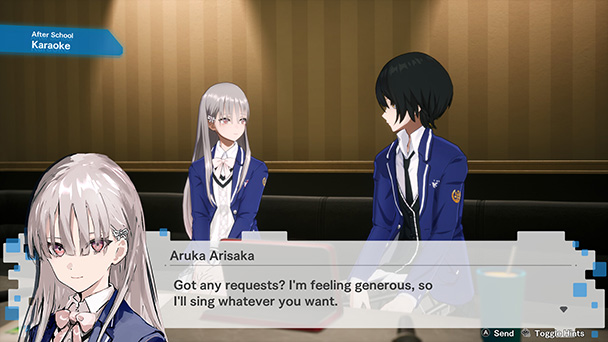
Combat employs a familiar turn-based structure, with Varlet putting its own spin on formula. Each party member channels a different emotional archetype, which dictates their available skills. So, rage-based abilities dish out explosive bursts of damage, while anxiety-driven skills hamper opponents with status effects.
Battle Tedium as Well as Angst
In theory, Varlet’s battle mechanics seem like a clever way to highlight the game’s psychological themes. But in practice, the title struggles with creating an engaging battle system, especially over long-term play. There are balancing issues with some archetypes stronger or more useful than others within the cast of seven potential party members. And since there’s no conventional Magic Point system, you’ll likely favor your strongest attacks and incessant healing.
Worse still, encounters tend to drag once the novelty of the system wears off. As mentioned, enemy variety is limited, so their attack patterns rarely surprise. Boss fights, which should represent clashing with the darkest corners of a character’s psyche, are undermined by sponginess and predictable phrases. Near the halfway point, battles devolve into a time sink with no challenge or peril across all three difficulty levels.
Undoubtedly, there are several interesting ideas, such as the inclusion of things like guard breaks and the manipulation of a turn order. Since stronger attacks take longer to initiate, Varlet attempts to integrate a bit of strategy. But most of the combat systems are undermined by the aforementioned balancing issues. Consequently, combat grows monotonous, feeling like an obligation needed to push the plot along.
Expect to Hear the Word “Sonar” a Thousand Times
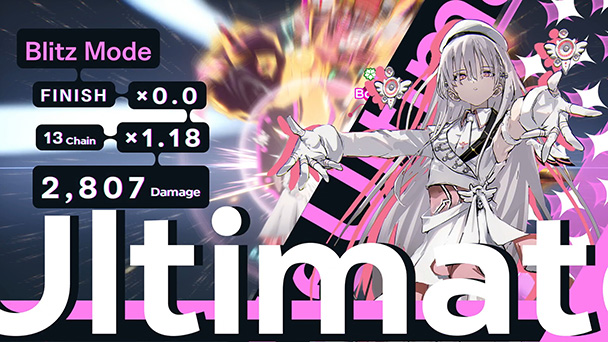
Outside of the dungeons, much of your time will be spent performing Student Support Services tasks. These function as side missions, sending you around campus to do things like post e-flyers, returning lost objects, and engage in ethical dilemmas called Triad Judgements. Finding many of these errands requires you to spam a button that pings the area around you.
The reward for your efforts are social media ‘likes’ for the guild, which eventually expands the perimeter of your sonar range. I’m not sure if Varlet is commenting on the futility of social media incentives, but I found myself resentful that I squander so much time tackling these assignments. You’ll also eavesdrop on the conversations of small groups of students. This gradually fills in student profile data with Johari, Kousai Academy’s ubiquitous app. Similarly, I wasn’t enamored by role-playing as a human data-miner. Although there were some activities and interchanges to connect back to the game’s psychological themes, the bulk of them felt like filler.
Narrative Ambition x Mechanical Shortcomings
All of this culminates in a game that’s narratively ambitious but mechanically frustrating. Varlet is best when it explores psychology, demonstrating some of the sources of digital-age anxieties. But as a whole package, the game sporadically falters under the weight of its unbalanced systems and undercooked combat. For players willing to endure its inconsistencies, there’s a poignant story buried beneath the flaws. But players seeking an alternative to Persona may drop out of Kousai Academy disappointed.
Varlet was played on PC with review code provided by the publisher.
Overview
GAMEPLAY - 35%
STORYTELLING - 80%
AESTHETICS - 80%
ACCESSIBILITY - 70%
PERFORMANCE - 70%
VALUE - 15%
58%
FLAWED
Varlet delivers some sharp psychological commentary about an always-online generation, but it too often buries them beneath tedious combat and filler tasks. With the story and themes are engaging, if you’re hoping for a Persona-level experience, expected to be frustrated by the game’s conspicuously uneven execution.


Solid review. Some of the same issues mentioned as RPGsite and a few others. Do you think they’ll patch the healing?
Lower than most of the scores. I’ll find out if this is accurate once it drops in price. 👾