Toaplan Arcade Collection Vol. 1 review
An Eight Game Time Capsule from Gaming’s Golden Era

Any respectable overview of shooting game history wouldn’t be complete without a discussion of Toaplan. Once situated in the cedar-lined streets of Suginami, the prolific developer released sixteen STGs between 1985 and 1993. Over this eight-year span, innovations were abundant.
Previously released in piece-meal format on PC, Toaplan Arcade Volume 1 delivers a compelling package of eight different entries, with notables like Flying Shark, Tiger Heli, and Fire Shark, showcasing the developer’s profound influence on the genre. Expectedly, these games come with modern enhancements such as online leaderboards, screen filters, and quality-of-life additions like rewind functionality, making this compilation accessible to both newcomers and veteran score chasers alike.
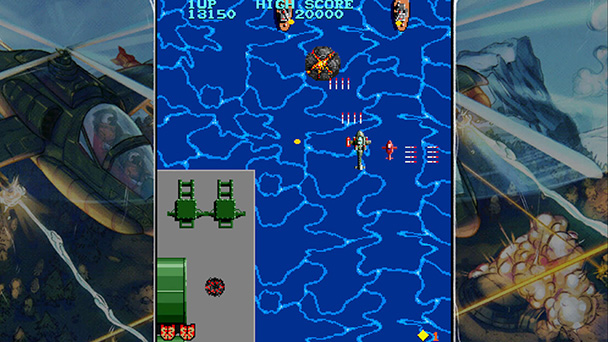
May 1CCs be Plentiful and Your Sacrifices Prove Worthy
Gameplay across the collection is varied but consistently engaging, offering everything from the classic vertical and horizontal shooters to the run-and-gun style of 1990’s Out Zone and FixEight. Naturally, each game features unique mechanics, arsenals, and scoring systems that encourage replayability through score chasing. But just as fascinating as the weaponry is being able to witness the evolution of one of the genre’s trendsetters.
Bookending the Legacy: From Tiger-Heli to Batsugun
1985’s Tiger-Heli is one of the developer’s early outings, notable for pioneering the bomb mechanic. Its pacing and challenging on enemy placement laid the groundwork for Toaplan’s signature blend of methodical strategy and explosive action. On the other end of things, 1993’s Batsugun is the developer’s final shmup, often heralded as popularizing the “bullet hell” (or danmaku) genre. Its innovative weapon leveling system and visual detailed, delightfully frenetic gameplay would establish new design conventions, sustained when key Toaplan members went on to form CAVE.
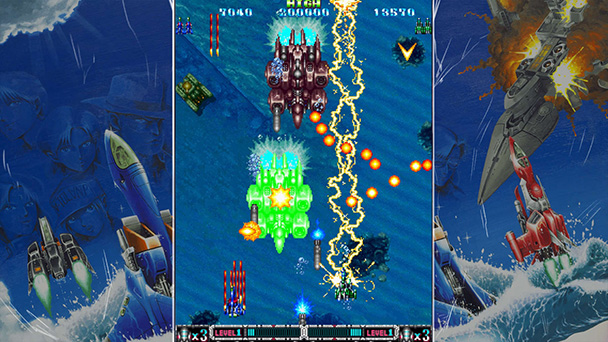
Let Adversity Rain Down
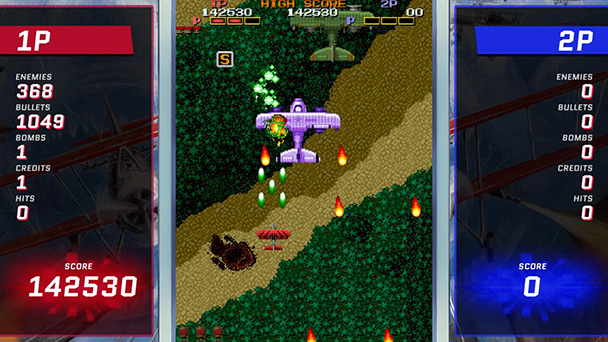
Arcade Collection Vol 1’s line-up of vertically scrolling shooters offers a synopsis of the Toaplan’s mounting technical prowess. 1987’s Flying Shark (Sky Shark in North America) established the developer’s reputation for challenging WWII-era gameplay. Built on Motorola’s new 68000 microprocessor, the title was able to render more on-screen sprites than its peers. Successor Twin Cobra retained the military aesthetic and vertically scrolling action, but introduced weapon-selecting power-ups, cooperative play, and greater stage variety.
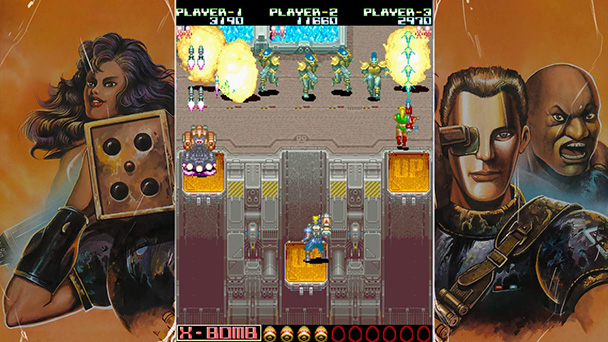
1989’s Fire Shark further enhanced the formula with more powerful weapons, distinct power-up types, and intense, screen-filling action. 1990’s Out Zone shifted away from the unfriendly skies and into run-and-gun territory, delivering a fast-paced sci-fi experience. With its upgradable arsenal, a constantly draining energy meter, and close-quarters combat juxtaposed with screen-spanning enemy waves, it’s a curious entry in the Toaplan canon. But one that shouldn’t be overlooked.
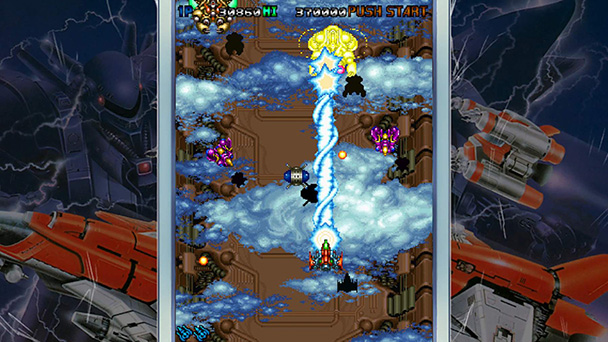
1992’s FixEight is the spiritual successor to Out Zone. With its eight-character roster and refined level design, the title maintained different play styles. Released four months later, Dogyuun brought Toaplan back to space, bringing dynamic weapon-combination system, richly detailed sprites, and inventive set-pieces along for the ride. It’s not as well known as some of their earlier efforts, but still holds up amazingly well.
Almost Everything, Including Brain Rot Borders
While all eight titles have preserved their arcade authenticity, Bitwave’s emulation is commendable. Input latency is minimal while visuals are as crisp or as smooth as you want, thanks to the inclusion of CRT-style filters. Meanwhile, optional gameplay assists means that folks unaccustomed to the brutal difficulty curves of the genre shouldn’t be overwhelmed. For purists, every enhancement is optional, allowing each game to be enjoyed in its raw arcade floor form. Meanwhile, the inclusion of online leaderboards strives to rekindle the competitive spirit that permeated amusement centers.
Toaplan Arcade Collection Vol. 1 serves as a commemoration of the lapsed developer’s illustrious legacy. While the main collection of eight seminal shooters can’t be faulted, the absence of any accompanying interviews, design documents, or even cabinet art is a glaring omission. Undoubtedly, the collection is worthwhile, but the curation could have been a bit better.
Toaplan Arcade Collection Vol. 1 was played on Switch with review code provided by the publisher.
Overview
GAMEPLAY - 80%
CONTROLS - 80%
AESTHETICS - 75%
ACCESSIBILITY - 80%
PERFORMANCE - 80%
VALUE - 85%
80%
GOOD
Toaplan Arcade Collection Vol. 1 gathers eight of the studio’s influential shooters, charting their evolution from Tiger-Heli to the chaos of Batsugun. With strong emulation, contemporary conveniences, and its arcade spirit intact, it’s a gem for genre fans. That said, some extra historical context would have made the anthology truly definitive.



$34.99 for those who want to know the price.
That’s less than $5 a game which seems fair. I might wait for a sale, though.
Still, great to see this come to Switch and consoles.
The one thing I opened this review for wasn’t there, does the vertical shooters offer tate-mode?
You can rotate the screen for all the games.