Street Racer Collection review
Is a Condensed Collection Better Than None?

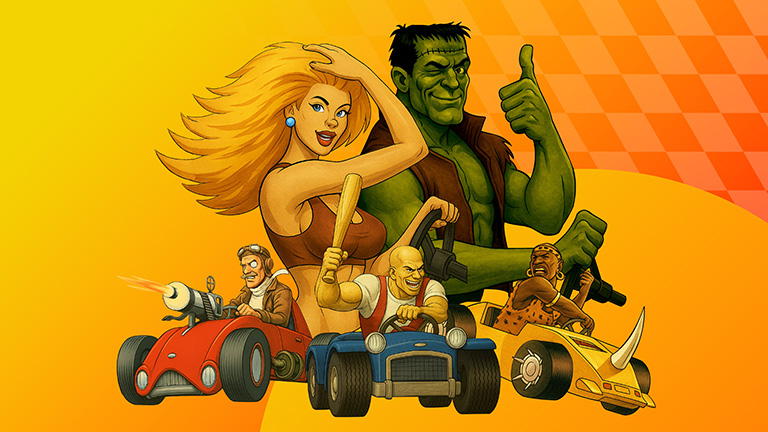
Instead of being a comprehensive anthology of Vivid Image’s cartoonish racer, Street Racer Collection offers a scattered collection of entries from this ‘90s franchise. The series started with a 1994 Super Nintendo release that blended technical ingenuity, kart racing, and plenty of combat.
One of the more remarkable bits of its history is how siblings Tony and Chris West used some clever coding to enable four-player split-screen without relying on Nintendo’s expensive DSP chip. While the three-dollars savings per unit, might seem trivial, publisher Ubisoft agreed to include the savings into the developer’s royalty payments, which was a rare win for developers in that era.
Encouraged by that game’s commercial success, Ubisoft pushed to expand Street Racer to other consoles. What followed was a succession of ports across platforms from the Genesis/Mega Drive, Saturn, PlayStation, and even PC, with each iteration pushing the basic framework in different directions. Undoubtedly, the eclectic cast, taut matches, and just enough aggressive edge made the title stand apart from Nintendo’s family-friendly kart racer.
Tracks, Slaps, and Rubber-Banding Laps
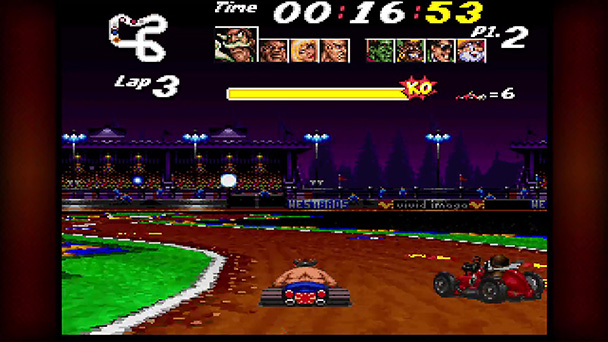
But here’s the thing: with only four different entries in the compilation (SNES, Genesis, Game Boy, and the DOS version), Street Racer Collection feels more like a sampler than a true retrospective of the series. And while the emulation is all thoroughly competent, players who’ve acclimated to contemporary karting games might find games within a bit archaic. Revisiting the SNES version of Street Racer revealed just how far the genre has advanced, as I had to relearn how to read the road.
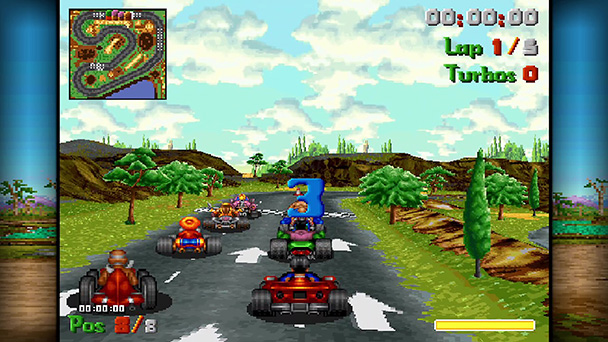
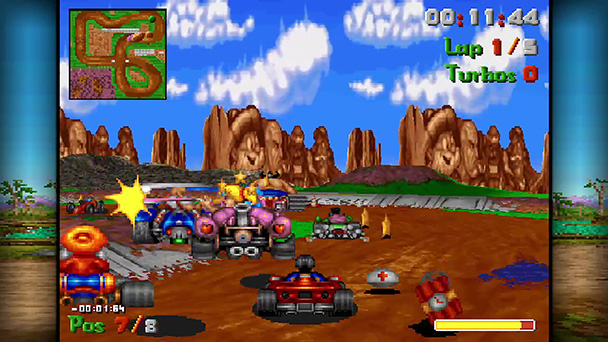
That said, there’s something enlightening about reexamining 90s design philosophies. Unsurprisingly, Street Racer borrowed heavily from Mario Kart, with plenty of snaking circuits that rarely provide any straightaway. Here, hairpins and tight curves dominate, prohibiting even a split-second of relaxation. Each character has their own special abilities which augments the ability to punch or slap your passing opponents, Road Rash-style. Factor in on-track features like turbo boosts and timed dynamite sticks that can be smacked onto opponents, and its evident Vivid Image really tried to intensify the rivalries. Three decades on, it’s still easy to imagine the development team split-screen testing after the workday.
But returning to the series through QUByte’s collection, can make Street Racer’s age apparent. The handling can be stiff by modern standards, the tracks are comparatively simple, and the sense of speed is muted. Mario Kart refined its mechanics for each new generation, but Street Racer feels frozen in a moment where experimentation hadn’t yet led to design conventions.
With the PlayStation or Saturn Versions, DOS Reigns
Across the four versions included here, the differences range from subtle mechanical quirks to platform-driven overhauls. The SNES original remains the most technically ambitious and recognizable, with its four-player split-screen matches and Mode 7 implementation which allowed the tracks to be coiled. Without this technological advantage the Genesis/Mega Drive version feels looser, faster, and more erratic AI.
More of an interpretation than a translation, the Game Boy port is the collection’s outlier. With its tracks and mechanics pared down to accommodate the handheld’s constraints, its inclusion is more of a curio that something you’d return to. Undoubtedly, the DOS version is a surprise highlight, with sharper artwork, a faster framerate, and with adept emulation, no need for messing with Sound Blaster drivers. As an assemblage, Street Racer Collection demonstrates how developers routinely reshaped games to suit hardware rather than pursuing parity.
When Manuals Were Mandatory
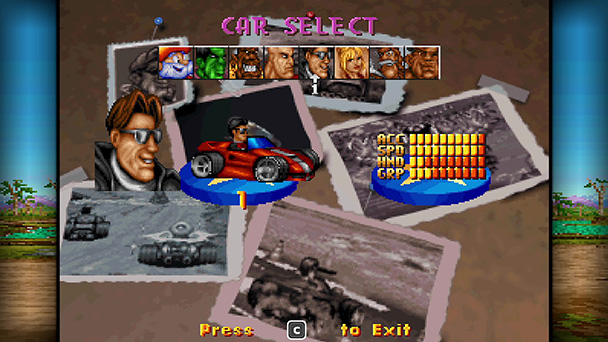
QUByte’s package also includes a small bundling of extras that help contextualize the series’ oddball charm. Scanned manuals, box art, and promotional materials are tucked into a minimalist menu, and while the presentation isn’t lavish, it’s enough to remind players how much personality existed outside the software. Instruction booklets of the time were wonderfully idiosyncratic, tossing together character bios, lore, and a bit of art. Leafing through these scans, digitized staples and all, adds a museum-like quality that the barebones interface lacks.
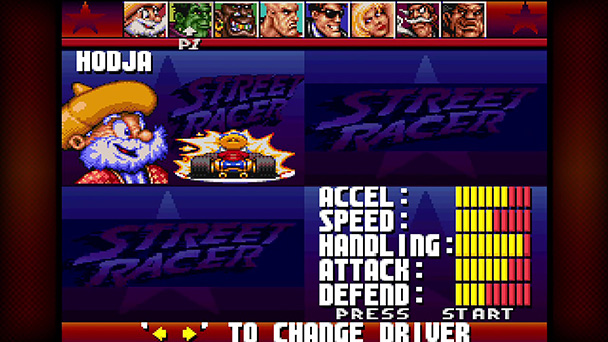
Flipping through the scans of art and documentation highlights just how eccentric Street Racer’s cast truly was. From the inclusion of Turkish folklore with Hodja, the E. Honda-like Sumo Sam, a hot-rodding Frankenstein’s monster, the eclectic cast channels classic ‘90s Euro-game energy. Likewise, some of the game’s soundtracks follow suit, with the DOS version providing everything from reggae and synthpop buried underneath the sounds of slaps and shoves. Naturally, purists might prefer Allister Brimble giving the SNES’s Sony soundchip a workout.
Careening Toward the Finish Line
Street Racer Collection isn’t a comprehensive collection, but it’s not a total cash-in either. The quartet of games included here show their age, sometimes painfully so, yet they also capture a moment when kart racers were lively and experimental. For players with nostalgia for the era or curiosity about a cult competitor to Mario Kart, this package offers a limited look at Vivid Image’s quirky franchise. But anyone hoping for a full anthology, or even the best versions of Street Racer, will probably wish this condensed collection had been just a bit fuller.
Street Racer Collection was splayed on PC with review code provided by the publisher.
Overview
GAMEPLAY - 70%
CONTROLS - 60%
CONTENT - 50%
AESTHETICS - 70%
PERFORMANCE - 75%
VALUE - 60%
64%
OK
Street Racer Collection feels more like a nostalgic sampler than a full-on retrospective, serving up four varied entries of Vivid Image’s spirited ‘90s kart racer. While it’s not the complete history fans might hope for, it’s a mildly fun, curious time capsule that demonstrates the power of split-screen rivalries.