Ruffy and the Riverside review
Brushstrokes and Brain Teasers

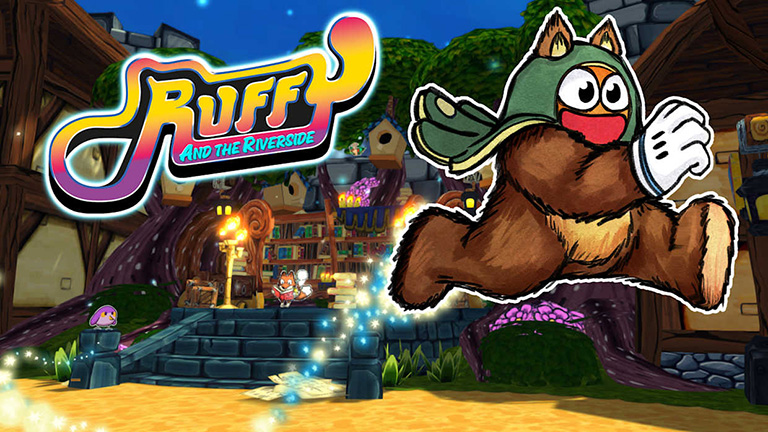
At first glance, Ruffy and the Riverside looks like it was lifted right out of the pages of a children’s storybook. Flaunting painterly textures, cartoonish characters, and a fairy tale-esque landscape, Zockrates Laboratories’ title doesn’t look like your average indie platformer. Sure, the use of papercraft style has been done before, with titles like PaperKlay and Born of Bread iterating on Paper Mario’s aesthetic.
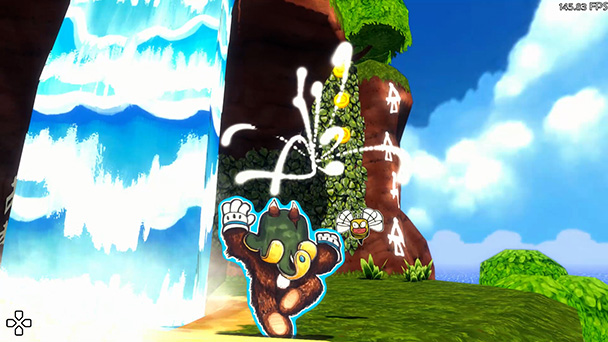
But Ruffy is a true treat for the eyes, with a vibrant palette and sprites that are brought to life with flip-book style animations. Occasionally, I’d just zone out and relish the game’s landscape, appreciating the perceptible pen strokes and Wind Waker-like water textures. Fortunately, the game’s charms extend past its graphical style. Beyond its enchanting exterior, Ruffy is a blissful puzzle-platformer with a really cool gimmick.
Copy, That!
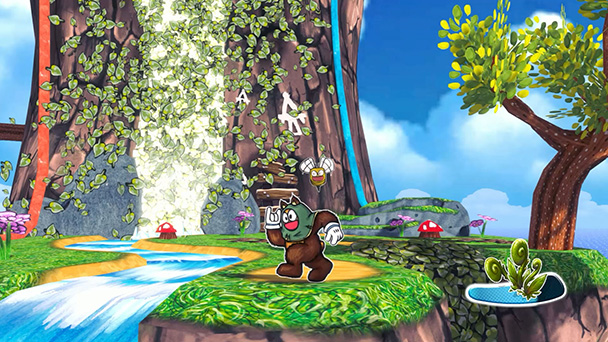
Riverside’s core mechanic revolves around copy-and-paste transformations. Ruffy the Bear can first absorb an object and then launch it to paint some other part of the environment. One of the first dilemmas has you falling in front of a waterfall. After copying a texture of a nearby shrub, the protagonist applies this leafy element to water, easily climbing his way out of danger.
In other instances, you might create your own tools. Need to open a door locked shut with massive iron orbs? Turn that archway into a giant magnet. Cleverly, Ruffy and the Riverside’s puzzles aren’t always centered on reaching a goal. Often, progress entails thinking about ways to manipulate the environment, such as creating an icy surface for Ruffy to slide across on. As such, tasks are often brainteasers that require you to observe, analyze, and harness the right combination of transformations. Best of all, when a solution isn’t immediately obvious, the game gives you just enough clues to push you in the right direction.
That said, puzzle difficulty gradually escalates. While early areas serve as a tutorial for the game’s signature mechanic, later stages present layered challenges that might temporarily stump even hardcore puzzle solvers. Yes, I encountered a handful of conundrums that confounded me. But by trying every combination of material traits, I eventually got to that gratifying “aha” moment.
Balancing Bear
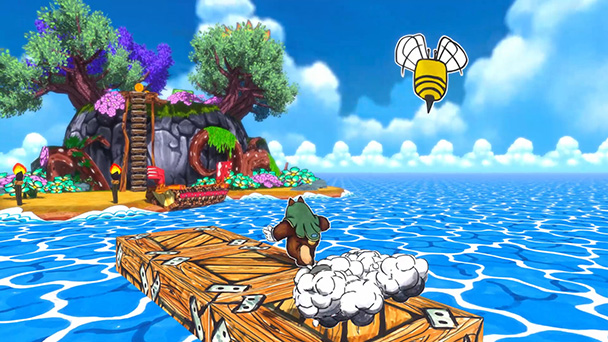
Best of all, Zockrates Laboratories doesn’t overuse Ruffy’s transformation ability. Instead, the spaces between puzzles are filled with light platforming, coins to collect, and hidden areas to discover, with each extending a slight change of pace. I appreciate that this isn’t another one of those precision platformers. Instead, Riverside delivers some light tests of environmental navigation that complement the puzzle solving. These send Ruffy hovering across improvised islands or sending him bouncing off spongy mushrooms.
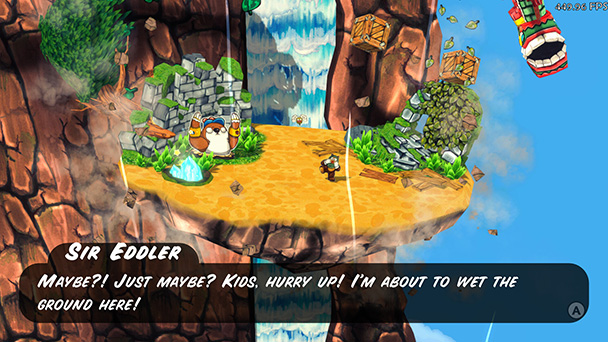
But the platforming sections aren’t just room-connecting filler. Beyond the joy of hovering across gaps, some materials are reactive. Surfaces might collapse after standing on them too long and others can be transmuted mid-leap to access hidden areas. For me, the moments where reasoning and reflex tests are where Ruffy really shined.
It’s Only Cheating If You Feel Guilty
Thankfully, the game’s platforming rarely punishes a misstep too harshly. Flub a jump and you’ll be sent back a few steps rather than sent to some far-flung checkpoint. As someone who dislikes having to repeat the same sequence of challenges until I get every step exactly right, I appreciated the leniency. Even better, this approach encourages experimentation as you test the limits of what can be accomplished. And habitually, Zockrates Laboratories lets you ‘cheat’, by using a bit of trickery to bypass a challenge. I can’t remember a game that understood player psychology as well as Riverside. It feels euphoric to swindle your way toward a solution.
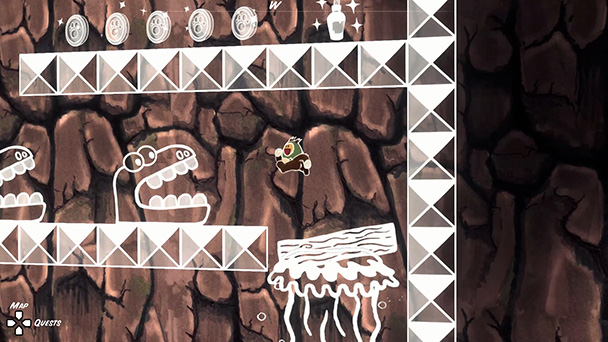
However, there are a few mild frustrations. The camera can occasionally struggle to frame Ruffy during moments of quick movement. Meanwhile some of the game’s vertical-oriented sections could signal depth a bit better. But largely, these are minor gripes for an otherwise polished platforming experience.
Ruffy is Resolute and Recommended
Many developers would have made Ruffy’s cloning capability the star of the show. But shrewdly, that’s just one part in this lovable bear’s captivating show. By fusing the puzzling with some accessible platforming, Riverside doesn’t get stuck in a repetitive groove. Instead, the blend of puzzling and platforming feels refreshingly unique. When combined with storybook-style aesthetics and a jazzy soundtrack, this about as joyous and jazzy as indie games get.
Ruffy and the Riverside was played on PC with review code provided by the publisher.
Overview
GAMEPLAY - 85%
CONTROLS - 80%
AESTHETICS - 85%
ACCESSIBILITY - 80%
PERFORMANCE - 80%
VALUE - 85%
83%
VERY GOOD
Ruffy and the Riverside is a captivating puzzle-platformer that mixes charming storybook visuals with a crafty copy-and-paste transformation mechanic. The engaging puzzles, forgiving platforming, and creative approach to puzzle-solving make this a definite delight.





So he’s from Riverside, CA? I’m sorry, Ruffy.