Quartet review
Role-Playing’s Past Meets the Present

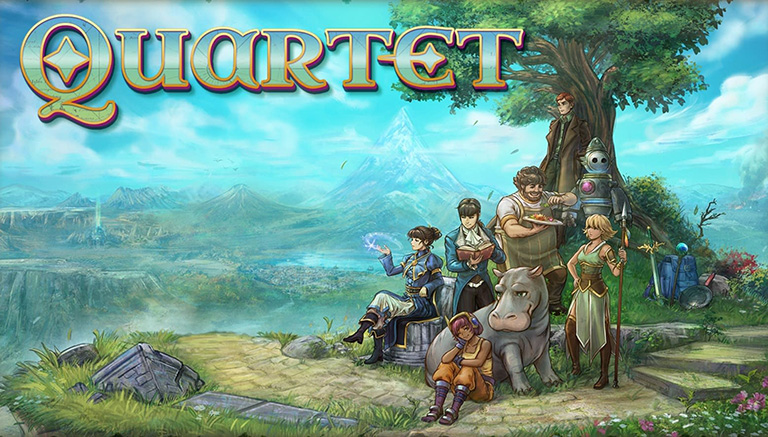
Something Classic Games’ Quartet might flaunt its influences proudly, but the game never feels like nostalgic imitation. Instead, the title blends SNES-era aesthetics, classic turn-based combat, with a modern sense of pacing. The result is a throwback RPG that will resonate with anyone who remembers Square before their merger with rival publisher, Enix. Fortunately, you don’t have to be a lifelong role-playing junkie to appreciate Quartet. In fact, anyone who’s looking for a heart-felt adventure that delivers taut design while shunning excessive grinding will appreciate this indie gem.
As its moniker suggests, Quartet’s structure is built around four individual narratives, each one focusing on a different protagonist. Each tale offers its own tone and setting, that ranges from political intrigue to a quest for vengeance, with ethical and personal dilemmas across each story. Much like Octopath Traveler, Quartet lets you explore these stories separately as it gathers the cast for a unified storyline.
In description, the structure might seem trite. But Something Classic’s writing is accomplished. What sets the game apart from its peers is the use of restraint. These tales might be smaller in scale but they’re richer in character, habitually finding intrigue in personal affairs and circumstance rather than the conventional world-ending crisis.
Toppling a General Is Just the Beginning
But that’s not to say that catastrophe isn’t present. The journey begins with a band of heroes chasing General Corsin up a mountaintop. The villainous leader has amassed a powerful form of elemental magic as a last-ditch effort to delay death. After defeating the general, the party discusses how the liberated resources should be used, before breaking up and going their separate ways.
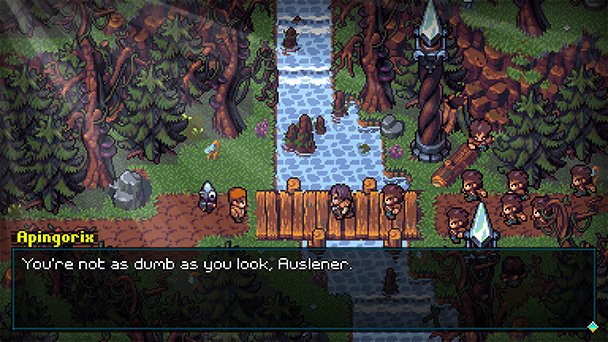
In many ways, this opening sequence serves as Quartet’s mission statement. Conflicts aren’t just about vanquishing evil, but also about what comes after. The game explores some captivating questions from how power is (mis)handled, what causes relationships to splinter, to how our choices reverberate outward, affecting others. Quartet’s journey through these kinds of subjects provides a contemplative tone that’s missing from most retro-inspired RPGs. Sometimes the human mind can just as enigmatic as a well-designed dungeon.
A Cast Written with Care and a Perceptive Ear
Deftly, Quartet’s protagonists form an engrossing ensemble, each introduced through their own personal context and struggles within the game’s fractured world. Nikolai Proch, a disillusioned army sergeant, faces the ethical burdens of war, while wrestling with guilt and responsibility. Ben Balani is a chef trying to keep his life afloat when he discovers magical powers, drawing him into situations that shifts between humorous and bittersweet. Cordelia Helmont is a graduate from a prestigious academy but loses her prospects after a family scandal. Lastly, Alexandra Hin is the youngest of the group and balances managing her family’s shop with caring for her comatose mother. She’ll soon circumnavigate her brother’s criminal predicaments, while being drawn deeper into the world’s supernatural mysteries. Generally, narrative fulfilment is rooted in witnessing each character’s personal dilemmas and ambition, rather than just overcoming adversity. Given the ethical quandaries tossed at each protagonist, identification with the cast comes easily.

Turn-Based Tradition with Some Innovations
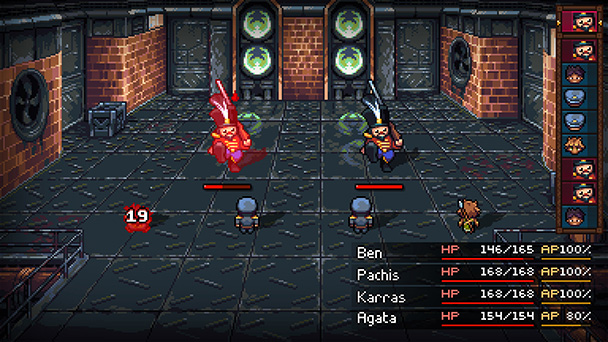
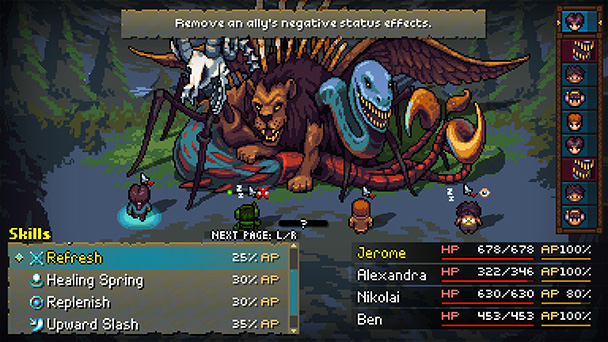
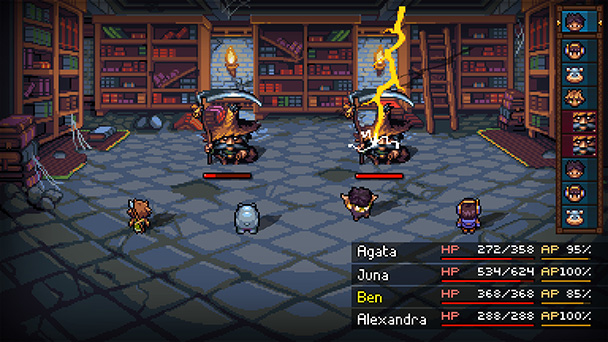
Quartet uses traditional turn-based combat as a foundation but offers refinement with several streamlined mechanics. As such, battles feel brisk and habitually encourage experimentation rather than the monotony of spamming of attacks and spells. The title employs a turn order system that’s displayed on the right side of the screen. Here, up to four active party members clash against up to three enemies, while reserves can be swapped in to act right away.
In battle, special abilities and spells both consume Action Points (or AP). Innately, characters can regenerate ten-percent back each turn, but recovery rates and AP caps can be boosted with equipment. Meanwhile, your reserve allies regain their AP while inactive, inspiring rotation during some of Quartet’s tougher encounters. Layered on top of these systems are a multitude of status effects, buffs, and debuffs that provide players with plenty of tactical nuances.
Quartet Deserves an Encore
A comparison to classic RPGs is probably inescapable, especially given the quality of Something Classic’s previous title, the prodigious Shadows of Adam. There are a multitude of retro-inspired titles that employ pixel art and menu-based encounters without capturing the substance of the era. But Quartet truly evokes the feel of early Square and Enix RPGs. Its expressive sprites, modest animations, and soundtrack all carry the sincerity of the 16-bit era. Yet, the game’s pacing, UI (give the HD font a try, at least), and narrative structure demonstration that this is a modern title. It’s less about evoking nostalgia more about respecting role-playing’s foundations while trimming the excess fat.
Pleasingly, Quartet aims more than just providing homage. It’s an RPG that understands why pplayers love the classics while recognizing what needs to be updated. The four interwoven stories are undoubtedly the game’s greatest strength. Each offers its own unique perspective, while still maintaining a sense of cohesion. If you’re a fan of masterworks like Final Fantasy IV, Chrono Trigger, or Phantasy Star IV you’ll find a lot to appreciate here. But so will any role-playing aficionado who craves a fulfilling adventure with a 25-30 hour running time. Quartet demonstrates that classic RPGs aren’t outdated. They’ll remain the blueprint for decades to come, telling timeless stories in fresh ways.
Quartet was played on PC with review code provided by the publisher.
Overall
GAMEPLAY - 85%
STORYTELLING - 90%
CONTENT - 80%
AESTHETICS - 85%
ACCESSIBILITY - 80%
VALUE - 100%
87%
VERY GOOD
Quartet is a retro-inspired RPG that fuses SNES-era charm with modern pacing, delivering four deeply personal stories. With streamlined combat and heartfelt writing, it shows how classic role-playing design can be prudently updated.





Just picked this up. So far, I’m two chapters in and loving it.