Lessaria: Fantasy Kingdom Sim review
Of Possibilities, Potion Vendors, and Pitfalls

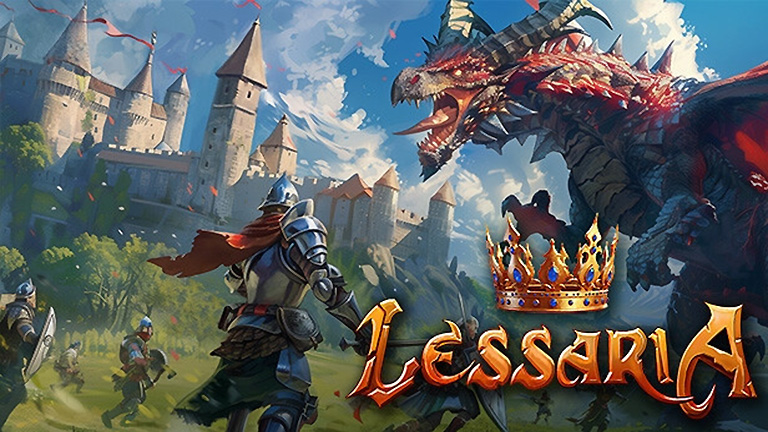
City sims tend to either embrace the comforts of nostalgia or the excesses of complexity. Drawing abundant inspiration from Cyberlore Studios’ 2000 hit Majesty, Lessaria: Fantasy Kingdom Sim strives to strike a balance between accessibility and ambition. As with many of its real-time strategy peers, the game drops players into a world where they must build guilds, manage resources, and ensure the safety of their growing realm against invading outsiders.
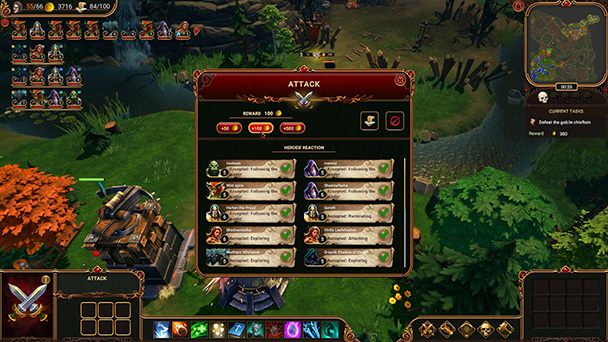
Yet unlike most city sims where you’re burdened with ordering around your villagers, Lessaria employs an autonomous AI system. Here, you’ll issue bounties to encourage adventurers to explore, retrieve relics, eliminate creatures or their lairs. But their willingness largely depends on their individual motivation and the size of your reward.
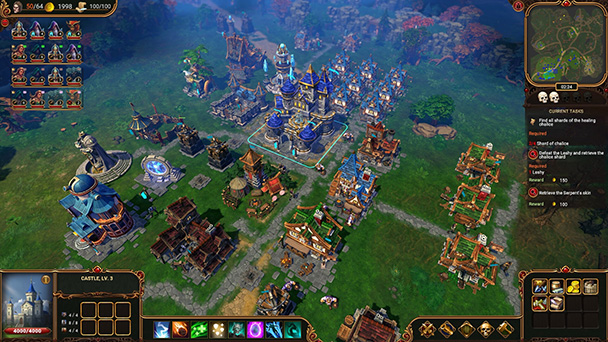
This means that progress is less about moving units around and more about leadership. The result can make Lessaria feel more dynamic than most real-time strategy efforts. While a menu might state that a reward won’t generate much interest, jobless rangers and thieves might still take on the task. And man, lowballing labor feels shamefully fun.
Throwing Money at Your Problems
But Lessaria’s approach means that combat ends up being less about tactics and more about incentivizing, which doesn’t feel as involving. If you appreciate the thrill of beating massive opponents with specialized units or just flanking your adversary, the system can feel too indirect. Entire parties often ignore urgent threats. And when they’re attacking a lair while overlooking the assaulting enemies that just crept out of it, the fighting can feel frustrating.
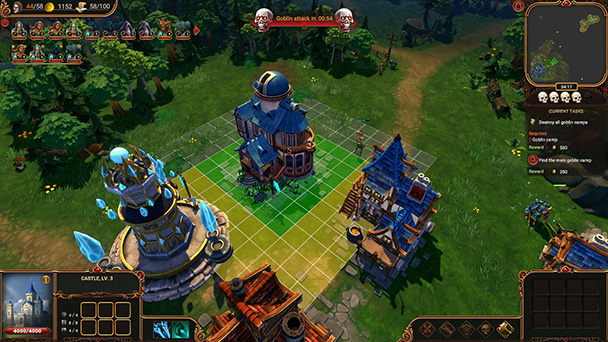
Typically, the lack of situational awareness will just cause you to issue new bounties. But given that Lessaria’s battlefields habitually evolve, reissuing rewards can feel like a chore. I like outsmarting and outmaneuvering foes, and dangling tastier carrots just isn’t that engaging. Another problem is that Lessaria’s battles are hard to visually read, especially when groups of friendlies and enemies, all with floating health indicators, become entangled.
When Adventurers Become Arachnophobes
Yet, the hero upgrade system is one of the more noteworthy mechanics of the game. As adventurers complete quests and earn rewards, they gain experience and unlock new abilities, skills, and equipment. Remarkably, they have memory, so a near-death struggle against a specific variety of enemy can produce a lifelong fear trait. The concept of battlefield trauma undoubtedly makes units feel more human. However, in execution, I conquered lands by force rather than digging into soldier’s dossier, so they didn’t have to face their fears.
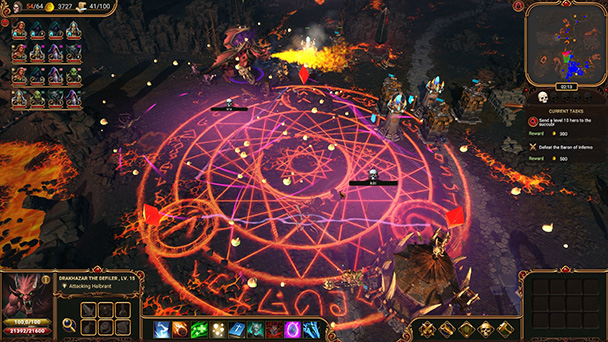
Meanwhile, unit upgrades are tied to both individual progression and guild development, providing some flexibility in shaping your heroes’ strategy. However, the system is somewhat linear, with a narrow number of branches and limited quantity of progression options. Although it’s rewarding to see your lowly rogue evolve into a skilled combatant, the lack of deep specialization means that the game’s campaign can grow tedious before you’ve tackled all 14 chapters.
A Slightly More Munificent Monarchy
When compared to Majesty 2, balancing deftly favors friendliness. Where a lack of gold could slow progression in Cyberlore Studios’ title, the flow of income is more liberal in Lessaria. However, in some ways, design takes a small step backward. This is most evident when you’re placing buildings, with maps feeling crowded and construction ranges taut. When it comes to performance, you can expect a fair number of visual abnormalities. Mostly, these are small glitches, like defeated enemies freezing rather than disappearing from the battlefield.
Lessaria’s Survival Mode reshapes the game’s mix of strategy and simulation into something that’s a bit more demanding. Here, resource management grows tighter, monster attacks grow in intensity, giving kingdom sim sages a through workout. The result is a mode that strips away the comfort of routine and places the game’s autonomous AI systems under a stress test. While Survival isn’t strong enough to carry Lessaria, the sense of urgency it delivers hints at what the campaign is capable of.
Lessaria: Fantasy Kingdom Sim was played on PC with review code provided by the publisher.
Overview
GAMEPLAY - 70%
CONTROLS - 70%
CONTENT - 75%
AESTHETICS - 75%
PERFORMANCE - 65%
VALUE - 60%
69%
OK
Lessaria captures the spirit of Majesty, providing autonomy to its real-time strategy units. While the hands-off approach to adventurer control is a worthwhile concept, uneven combat and occasional tedium remind you that even fantasy kingdoms can have faults.





Majesty had the same issue. City building was cool. But combat was too hands off.