Evangelion 2.22 You Can (Not) Advance review
A Slightly More Daring Descent into Chaos


2009’s Evangelion 2.22 You Can (Not) Advance continues the Rebuild saga’s ambitious reimagining, habitually eschewing being an unwarranted copy of the landmark 1995 anime. Where 1.11 stayed forgivably close to the original blueprint, this 108-minute sequel finds Hideaki Anno and his team confidently revising story and intensifying the sense of spectacle. The result isn’t just a technical feat, but a work that will challenge those with a fervent allegiance to the source material.
Notably, 2.22 rebalances its cast, shifting the dynamic between Shinji, Asuka, and newcomer Mari. Building on its predecessor, 2.22 plumbs deeper into Evangelion’s emotional territory, plunging its lead into moments of heartfelt vulnerability amid an escalating crisis. Here, Shinji’s mounting desperation, Asuka’s struggle beneath an armor of bravado, and Mari’s peculiar confidence reveal new facets. Best of all, 2.22 generates fresh uncertainties to relationships we taught we all knew.
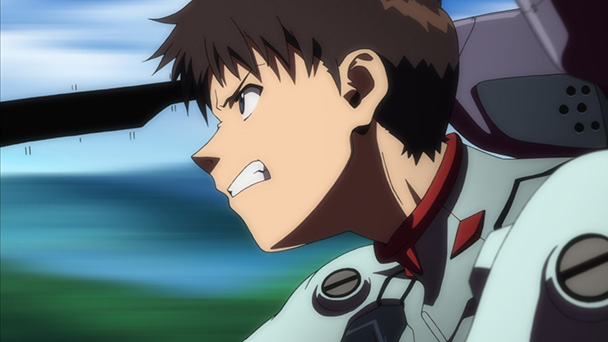
The inclusion of Mari Illustrious Makinami might be the best example of this shift. As a pilot unburdened by existential dread, Mari lacks Shinji’s emotional paralysis and Asuka’s sense pride and unchecked emotions. Through this character, director Hideaki Anno presents a fascinating question: what if someone entered the world of Evangelion without the trauma carried by its original cast? When her cheerful practicality is contrasted against Shinji and Asuka’s personalities, we’re given new perspectives of Eva’s original characters. The downside is that Mari’s disposition never quite gets an explanation, even in 3.333 You Can (Not) Redo.
Because of these tonal changes, 2.22 feels like a pivotal moment in the Rebuild series. This is where the films stop being mere retellings and start forming a bolder identity that’s a bit more human. The story beats are undoubtedly different, with brief moments of humor and fleeting moments of warmth. Yet, the feeling of dread remains palpable and never too far. The world has changed since the original series and so has Evangelion. While there’s the intermittent flash of comfort, so much seems disorienting and often unsettling. Sixteen years after You Can (Not) Advance’s original theatrical release, this standpoint is more relevant than ever.
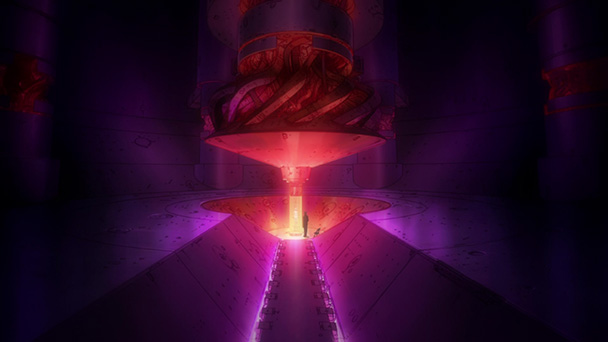
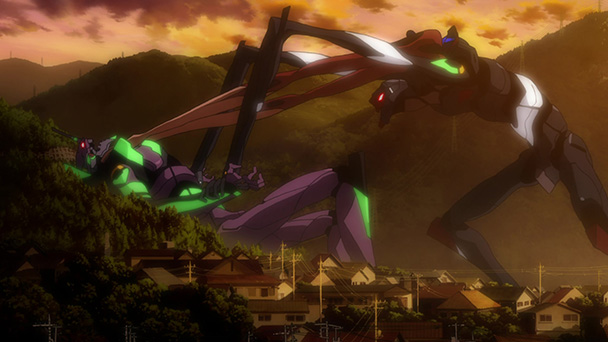
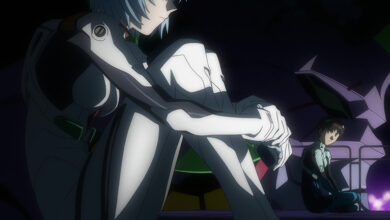
Visually, 2.22 delivers precision and polish. The film’s battle sequences, especially the fight against the Seventh Angel and Asuka’s confrontation in Unit-03, remain breathtaking. Frames are filled with detail, blending traditional animation and a CG in a way that feels cohesive. But of all, the 2.22 uses its animation not just for spectacle but for mood and meaning. Even calm moments between the chaos, like Shinji and Rei sharing quiet meals, reverberate with expressiveness, as we witness unspoken thoughts. Anno’s visual storytelling is so capable that you’ll almost forget how sparse the dialog can be at times.
Emotionally, 2.22 hits in a way the first Rebuild entry didn’t quite manage. This time out, the human side of the story gets the spotlight. From Rei’s attempts at connection, Shinji’s longing for approval, and all of the things that Asuka does to inadvertently isolate herself, much of the characterization feels razor-sharp. Evangelion was never just about watching teenagers pilot monstrous mechs. Instead, it’s a tragedy of emotional entanglements. With 2.22 You Can (Not) Advance’s final act we see those struggles collapsing into one giant, devastating moment. And it remains one of the more powerful sequences in modern animation.
Evangelion 2.22 You Can (Not) Advance is available via Amazon and GKIDS’ store.




Not quite a good as your 1.11 review but I’ll take it. 😉