DOG WITCH review
A Canine Caster with Real Roguelike Bite

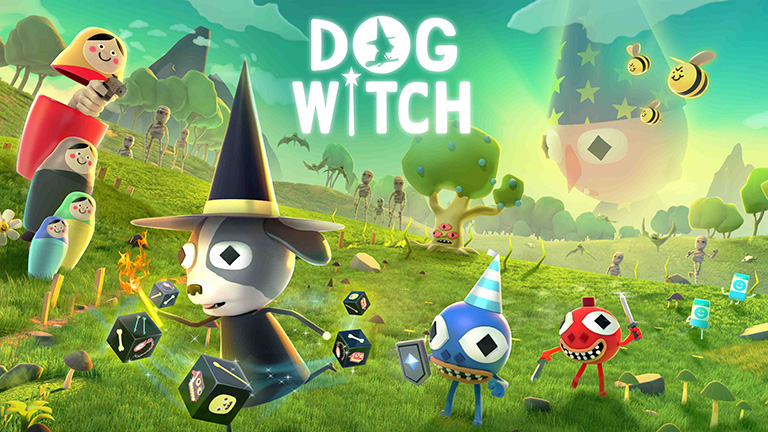
Sure, there’s no shortage of roguelike deckbuilders on Steam. But solo developer Heckmouse injects dice-driven combat and tactical card curation into DOG WITCH’s showdowns, providing a treat that’s flavored with distinction.
While many titles in the genre deliver familiar systems and predictable upgrade loops, DOG WITCH immediately carves out its own identity through a focus on resource randomness and turn-by-turn improvisation. It may look whimsical, with its broomstick-rising, and conical had-clad canine protagonist. but beneath the hand-drawn exterior lies a system that constantly nudges you toward experimenting and adapting in a way that feels fresh rather than frustrating.
Wagging the Wand
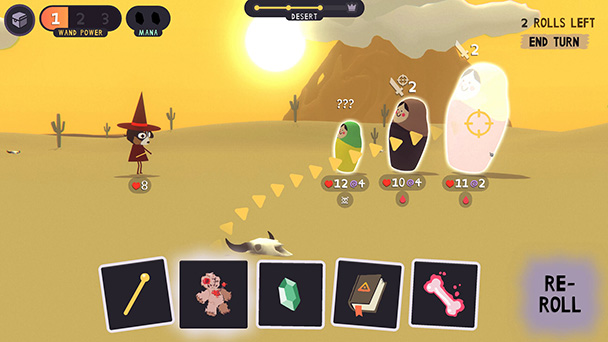
The game places players in the paws of the titular spellcaster, tasked with battling a succession of quirky foes that feel right at home in its slightly mischievous fantasy world. Across these turn-based encounters, luck, synergy, and planning all intersect in a compact but satisfying selection of decisions.
One turn you might be chasing big damage with perfectly aligned dice rolls. For the next, you might have to employ defensive maneuvers or damage-soaking summons just to survive. But unlike many of its contemporaries, DOG WITCH is as easy to pick up as an attention-craving puppy. The game’s onboarding is efficient, the user interface is clean, and the rules are simple enough for novice deckbuilders to easily grasp.
Paws-and-Effect Strategy
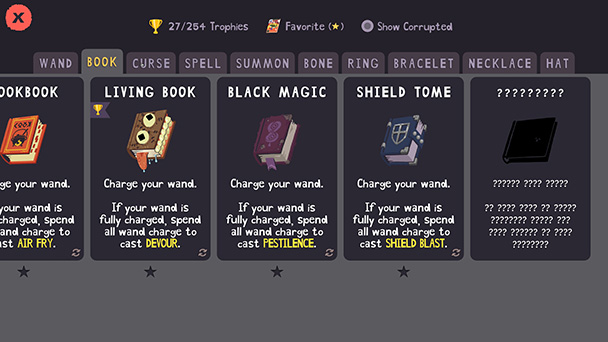
Pleasingly, the game’s blend of card deckbuilding with dice-based strategy distinguishes it from roguelikes like Slay the Spire, which focus more on branching paths and complex deck growth. Instead of trudging through labyrinthine maps or fussing over card bloat, DOG WITCH centers on the challenges of dice allocation.
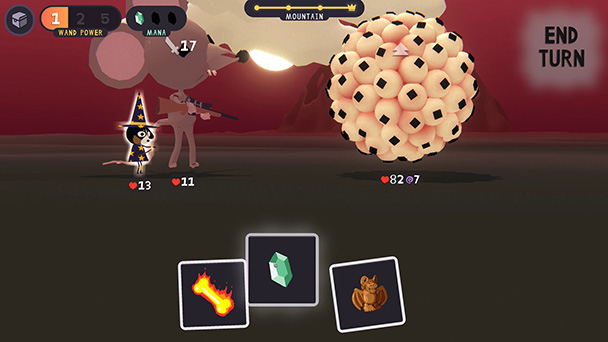
As such, each roll becomes a little puzzle: do you invest your high numbers into a devastating spell, or spread multiple smaller values across summons and support abilities? That moment-to-moment decision-making gives every encounter a dynamic feel that evolves as your build changes over time.
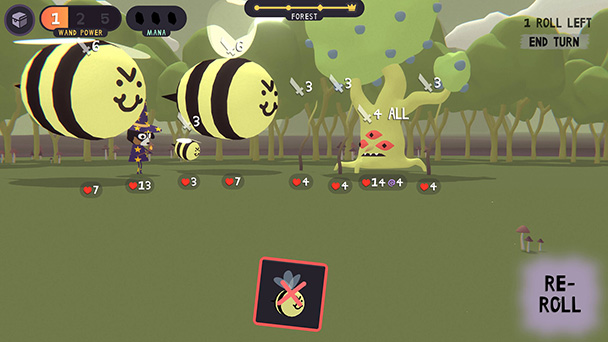
Here, players roll multiple dice each turn that will fuel spells, summon allies, and trigger item effects, making even simple choices feel surprisingly layered. Enemy designs take advantage of this system too, often forcing you to rethink your favorite combos when dice manipulations or conditional shields get thrown into the mix. Instead of gradually bloating your deck, you maintain a streamlined arsenal with one slot per card type, swapping tools and upgrading strategically after each battle.
Chihuahua Size-Choices, Mastiff-Sized Payoffs
This restrained structure makes every upgrade feel significant and every removal impactful. Just as importantly, the approach keeps gameplay accessible but also deceptively challenging. Often victory hinges on perceptive upgrades and the interplay between your cards, allies, and gear, rewarding players who pay attention to the relationships hidden within their loadouts.
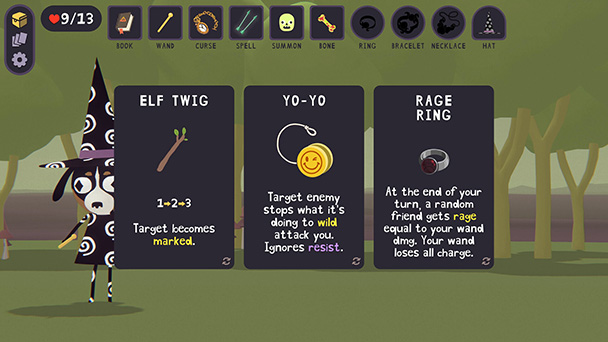
One of DOG WITCH’s standout qualities is its personality, which radiates from every corner of the game. The hand-drawn art blends cute character designs with just enough eerie flair to sell the supernatural theme. Enemies are memorable not because they’re grotesque or overly threatening, but because they each have a playful gimmick that ties into their combat mechanics. The soundtrack shares a similar attitude as well. It’s light, bouncy, and full of charm, ensuring that tense battles feel inviting rather than stressful.
Runs move at a brisk pace thanks to the taut encounter structure, which favors a steady flow of meaningful battles over excessive map traversal or filler events. You’re never more than a few clicks away from another dice roll or another upgrade, which gives the game a rhythmic tempo that many deckbuilders struggle to maintain. This keeps even short play sessions satisfying, while longer sessions naturally are driven by experimentation as you trial-and-error with different builds.
Lightweight, Lovable, and Full of Heart
Progression is handled with a gentle touch. While you unlock new cards, items, and modifiers, DOG WITCH resists showering players with meta-progression that breaks the balance of early runs. Instead, these unlocks tend to increase options rather than just intensify raw power, encouraging you to revisit earlier strategies with newfound angles or combinations. It’s a smart design philosophy that welcomes you to try out different strategies rather than just grind your way the game’s six-hour trek.
If there’s a drawback, it’s that players who like rambling runs, multi-act structures, or even some complexity may find DOG WITCH lighter than expected. But hey, that’s part of its game’s charm. It’s a roguelike deckbuilder distilled into a spirited and immediately rewarding form. Heckmouse’s design celebrates creative problem solving over punishing difficulty. And in a crowd of games that often mistake density for depth, DOG WITCH stands proud as a reminder that sometimes the simply is the most enchanting. Good boy, indeed.
DOG WITCH was played on PC with review code provided by the publisher.
Overview
GAMEPLAY - 80%
CONTROLS - 70%
CONTENT - 75%
AESTHETICS - 75%
PERFORMANCE - 70%
VALUE - 75%
74%
GOOD
In a sea of deckbuilders, DOG WITCH stands out by keeping things simple and clever. Its dice-fueled combat makes every choice a tiny puzzle worth chewing on.