Battling, Building, and Busywork in Arknights: Endfield
A Promising Foundation but Endfield Still Needs a Hook


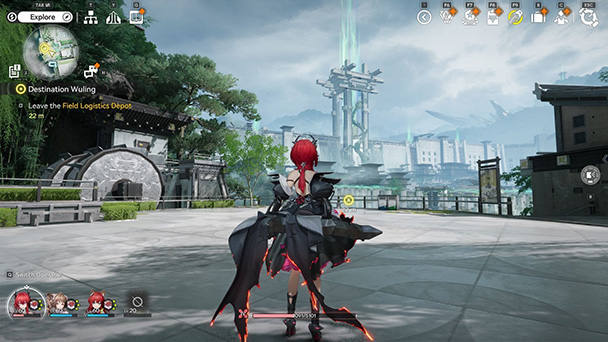
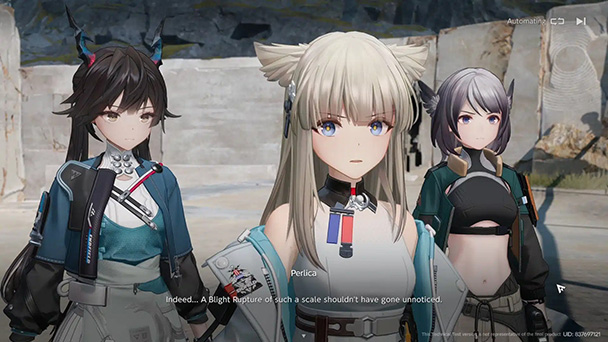
Arknights: Endfield plunges you into the rugged frontier world of Talos-II, a dangerous, devastated land filled with strange creatures and picturesque expanses. You begin by selecting either a male or female Endministrator, before awakening from cryo-sleep with little memory of your past. Yes, amnesia is a cliched premise, but at least there’s a cutie with cat-ears named Perlica that shows you the ropes. Attractive cinematics and a God of War–style showdown against a towering boss help establish the tone, offering visual spectacle more in line with a premium console action role-playing game than a free-to-play, live service title.
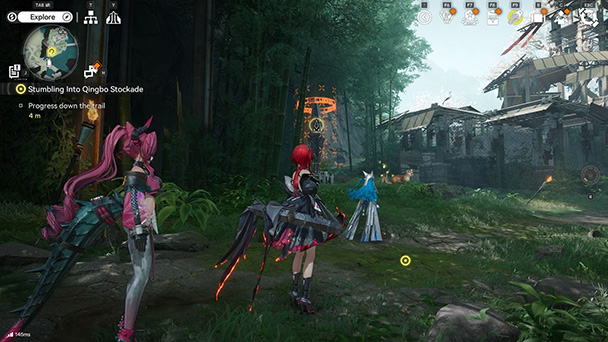
Once this imposing showdown ends, Endfield settles into real-time combat that provides a bit of tactical depth. You build a party of up to four characters, each with distinct roles and abilities, switching control between them mid-fight. Meanwhile, the other members of your party continue to fight, performing basic attacks and occasionally jumping in for a chain combo. The combat feels competent, but not exactly thrilling, as you deliver long combos that gradually wear down enemy health. Largely, foes are spongey, and while animation variety is appreciated, the encounters begin to feel predictable after the novelty wears off.
Elemental Radiance, Indistinct Impact
The elemental system deserves praise for trying to inject strategy through counter mechanics and synergy bonuses. Still, the payoff for proper coordination doesn’t always feel worth the effort. You can tell that Shanghai-based developer Hypergryph wanted precision and timing to replace button-mashing, but cooldown-heavy abilities and inconsistent AI cooperation dampens those ambitions. The result is an action system that looks better than it feels, which is an ongoing refrain throughout Endfield.
Talos-II itself fares a bit better. The world captures a sense of decay and isolation, which constantly nicely with the impeccably drawn anime-style characters. But despite that visual flair, the open zones could use more interaction. Exploration mostly boils down to waypoint chasing, light mining, and occasional skirmishes. Environmental storytelling exists with a collapsed pipeline here, a forgotten data terminal there, but it never quite gels into something truly gripping. Yet, there’s a sense of potential persistently peeking out from behind a fog of repetition.
Building or Busywork?
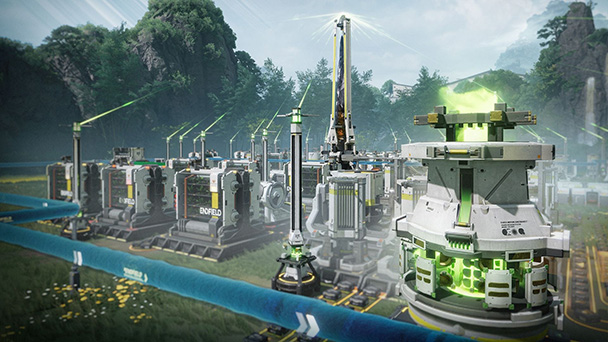
The base management system tries to shake things up, and it’s promising. Tasks such as upgrading modules, gathering materials, and constructing improved facilities provides a welcome break from fighting, as you construct Factorio-style assembly lines. But in execution, it’s another layer of resource grinding. Some upgrades are gated behind arbitrary timers or rare items tucked in late-game areas, which can slow progress down. The loop can feel more like busywork, especially when the improvements don’t significantly affect your effectiveness in the field. But that’s a ubiquitous issue common with many free-to-play titles, where upgrades are nearly imperceptible. Undoubtedly, Endfield won’t be the last game to suffer from padding.
Technically, Endfield impresses, given it’s mobile-first design. Models are richly detailed, and the lighting engine is given a thorough workout during set pieces. But optimization remains patchy. Frame drops during large-scale fights are common and camera jitter occasionally undermines the game’s otherwise polished presentation. It’s not unplayable, but these cracks make Endfield feel more aspirational than finished.
The Gacha Gotcha
The looming live-service layer reminds you that everything eventually ties back to revenue. Pulling new operators through gacha banners feels familiar, but the progression economy already hints at the grind creeping in after the first dozen hours. Gear upgrades demand specific drops from time-gated missions, and store prices push players subtly toward paid solutions. To be fair, it’s less aggressive than many competitors, yet it’s hard to shake the feeling that the best rewards, and maybe the best pacing, sit just beyond a paywall.
Arknights: Endfield sporadically struggles to connect its two halves. While you’ll be lured in by console-style role-playing, the monetized live-service approach can artificially slow things down. When the combat clicks and the landscape opens up, there’s enjoyment to be found and a glimpse of the story-driven action that fans are hoping Hypergryph can deliver on. But a lack of true mechanical attraction keep Endfield from meeting its ambitions. While chances are inevitable, at present this feels more like a promising prototype than a fully realized experience.