Atelier Resleriana: The Red Alchemist & the White Guardian review
Not Bold, But Beautifully Consistent


For over twenty-five years, Gust’s Atelier series has carved out one of role-playing’s richest lineages. With poignant plotlines that touch on self-actualization rather than the typical world-in-crisis scenario, the franchise has offered an engaging break from the genre’s more melodramatic, world-in-crisis efforts.
Through the years, the series has experimented with time limits, open fields, and even ensemble casts. And in many ways, Atelier Resleriana: The Red Alchemist & the White Guardian represents the rare lateral movement with an experience that’s neither better nor worse than the Ryza’s trilogy. For alchemy addicts, that will probably be good enough.

Loss, Legacy, and (Urban) Renewal
Red Alchemist & the White Guardian’s storyline centers on two protagonists, Rias Eidreise and Slade Clauslyter, returning to their hometown. Twelve years earlier, a mysterious red mist enshrouded Hallfein, causing the population to disappear and monsters to materialize. Movingly, both Rias and Slade are united by grief. The former, an aspiring shopkeeper, lost her grandfather who was a merchant loved by the local community. The latter lost his parents, who left behind mystical relics known as Geist Cores.
The narrative unfolds as the pair explore dimensional pathways opened by the artifacts, unraveling the tragedy as they strive to restore Hallfein to its former glory. Remarkably, there’s some emotional depth to Red Alchemist & the White Guardian’s storyline, as the script explores loss, hope, and the drive for renewal.
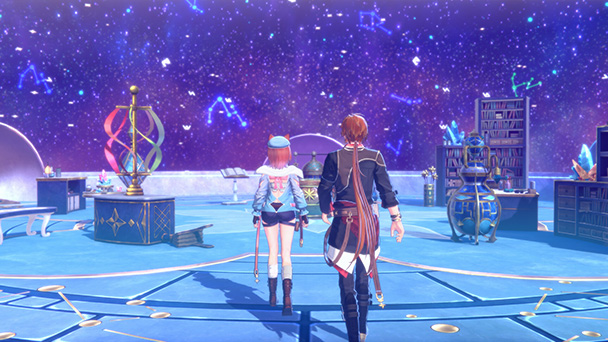
Without spoiling things, the inclusion of nostalgic characters from earlier Atelier enriches the feeling of warmth, while bridging the series’ past and present. More than one cameo felt like a chance encounter with an old friend that I hadn’t seen in years.
Improvisation Through Unity
Combat in Resleriana blends traditional turn-based mechanics that are streamlined with some modern pacing. Characters act on a timeline-based initiative gauge, where attack speed, skills, and buffs can manipulate turn order. Each party member has access to regular attacks, alchemic arts, and Geist Core techniques. The result are encounters that shift between conserving MP for drawn-out skirmishes and unleashing powerful bursts when the opportunity arises.
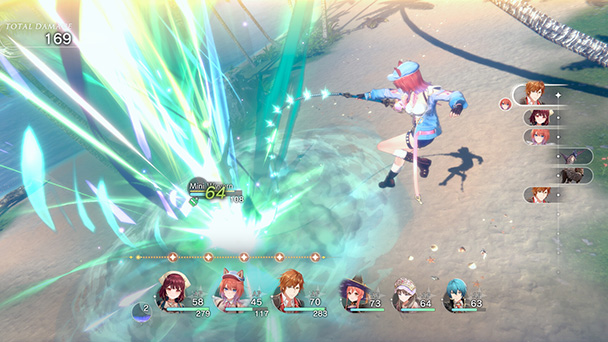
Adeptly, there’s a bit of improvision in battle, too. After filling the Unity Guage by attacking, you can opt to harness some of its power, allowing several characters to attack simultaneously. Some of your alchemy-crafted items can swing the momentum. From bombs, healing draughts, to status powders, your efforts can produce tools that are essential for survival, especially when bonuses are applied to certain item combos. But that’s not to say that fights are excessively tough, at least not before Chapter Six. But they do demand attentiveness, which helps to keep these encounters from becoming repetitive.
Offense Meets Defense: Rias x Slade’s Synergy
At the heart of the game’s combat system is the interaction between Rias’ offensive alchemy and Slade’s defensive relic mastery. Rias excels at dealing elemental damage and dishing out status effects, while Slade can summon shields, spirit barriers, or taunts produced by his Geist Cores. Swapping in supporting party members such as Atelier’s renowned alchemists adds another layer of strategy. With their collaboration, you can trigger combo effects, boosts, and even extra turns.
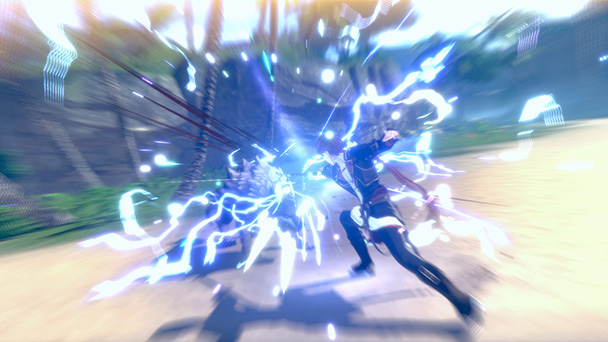
Expectedly, bosses will test your mastery of the game’s systems. They might shift phases mid-battle or adjust resistances goading you into adjusting your party order or amending your loadout. Largely, combat isn’t just about stats but stresses using the right tools at the proper moment. Victory often hinges on synergy. Knowing when to utilize Rias’s high-damage alchemy chains or when to deploy one of Slade’s Geist barriers to weather a devastating attack can prove essential.
Streamlined Systems with Strategic Depth
While combat can be stirring, alchemy is the glue that binds the entire experience together. Much like in prior entries, you’ll gather raw ingredients from exploration, battles, and side quests before bringing them back to your atelier for synthesis. Recipes are unlocked through story progression and experimentation, and each one tasks you with slotting materials into a grid where properties and elemental affinities determine the quality of the final product.
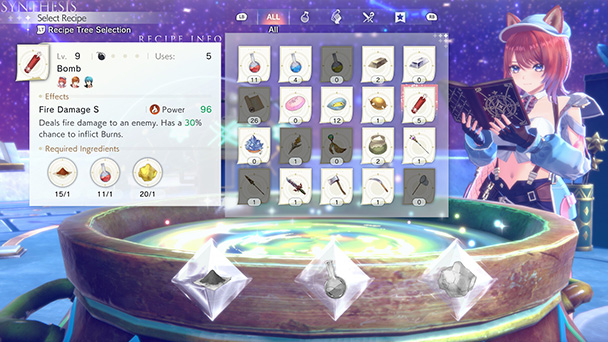
As with more recent Atelier entries, it’s not just about combining items to create a bomb or potion. Instead, it’s about fine-tuning results. A basic healing salve can be optimized for a wider area-of-effect restoration, quicker activation, or even made with resistance buffs depending on the materials. As such, you can build your own customized toolkit that complements your play style.
Yet Resleriana’s alchemy has also been streamlined. In place of the puzzle-like systems of Sophie 2, the game adopts a more welcoming interface with a bit more clarity. Key traits are revealed before you synthesize, and previews show how properties will transfer. However, veterans shouldn’t feel too shortchanged. Some advanced recipes unlock multi-step crafting chains, where you’ll first create intermediary reagents before using them for higher-tier items. These extended alchemy loops force you to plan ahead, offering a reward for players who forage rare materials or experiment with different combinations.
Stable Performance on PC and Steam Deck
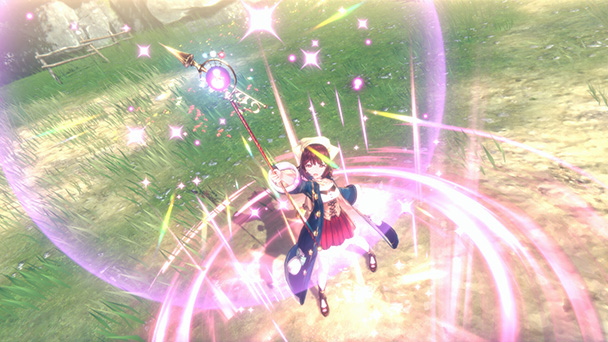
Visually, Red Alchemist & the White Guardian sustains Gust’s fondness for painterly aesthetics across its pastel-hued backdrops. Meanwhile, the sporadic particle effect and expressive character models can make combat and cutscenes come alive. And I don’t think anyone in this business renders eyes so devotedly. Largely, towns showcase cozy details, battle animations are fluid, and the game maintains a consistent 60fps on PC, even scaling down smoothly when running on the Steam Deck.
Performance on the handheld is surprisingly stable, with only minor dips during effect-heavy boss fights, making it well-suited for portable play. Complementing the visuals is another standout soundtrack, blending upbeat town themes, delicate string arrangements, as well as the adrenaline-pumping battle scores. As with previous entries, the art direction and audio create a cozy atmosphere that feels like quintessential Atelier. For some, the omission of English voice acting might be an impairment.

A Reunion Worth Attending
Atelier Resleriana: The Red Alchemist & the White Guardian might not offer a reinvention of Gust’s cherished series, but it elegantly balances tradition with refinement. The game’s heartfelt story, streamlined alchemy, and engaging combat systems make it a worthy addition to the long-running saga, even if it plays things safe compared to the boldness of the Ryza trilogy. For veterans, it feels this will feel like a warm reunion, inviting its fan back into one of role-playing most comforting worlds.
Atelier Resleriana: The Red Alchemist & the White Guardian
was played on PC with review code provided by the publisher.
Overview
GAMEPLAY - 85%
CONTROLS - 80%
CONTENT - 90%
AESTHETICS - 100%
ACCESSIBILITY - 75%
VALUE - 85%
86%
VERY GOOD
Atelier Resleriana: The Red Alchemist & the White Guardian may not break much new ground for Gust’s long-running series, but it delivers a heartfelt mix of streamlined alchemy, lively combat, and a moving storyline about loss and renewal. It’s less about reinvention and more about the power of periodic emotional pull.





Glad to see this released at $60. $70 would have been too much.
You realize there’s a $40 season pass, right?