The Legend of Heroes: Trails beyond the Horizon review
After Twenty Years of Storytelling, Closure Is Taking Shape

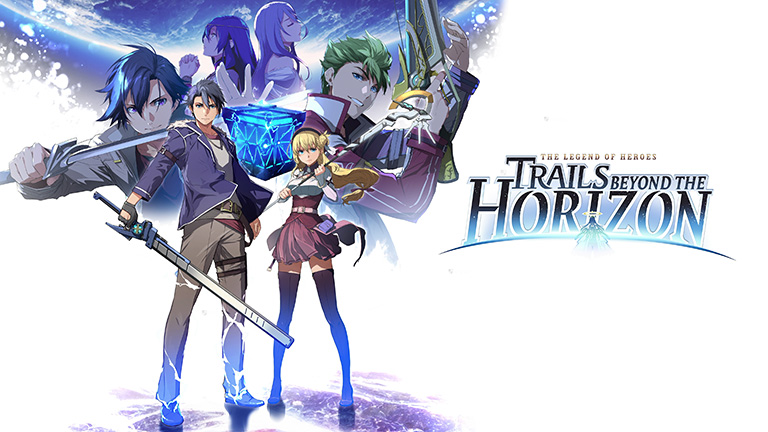
The Legend of Heroes: Trails beyond the Horizon is the latest installment in Nihon Falcom’s long-running Trails saga, a series that’s defined by its meticulous worldbuilding, socio-political intrigue, and a novelistic sense of continuity. For over two decades, the franchise has unfolded across multiple regional-based arcs, from Liberl, Crossbell, Erebonia, to Calvard. Each told a largely self-contained story while resourcefully feeding into a larger, continental-wide narrative unrivaled across contemporary media. Trails beyond the Horizon bridges these arcs and brings the Calvard arc one step closer to culmination, delivering an essential entry for Falcom’s fanbase.
To fully appreciate the game’s ambition, it helps to understand how these arcs have functioned historically. Earlier entries emphasized local conflicts: the youthful idealism of Liberl’s Bracer Guild, the geopolitical tensions of Crossbell’s independence, and Erebonia’s imperial determinations. Meanwhile, Calvard’s arc, introduced a more morally ambiguous, technologically accelerated society. Beyond the Horizon synthesizes these perspectives, treating them less as separate chapters and more as competing philosophies. Sure, you can enjoy the game without the burden of analysis. But if you’re looking for a bit of contemplation, beyond the Horizon is more than willing to indulge.
From Regional Squabbles to Philosophical Discord
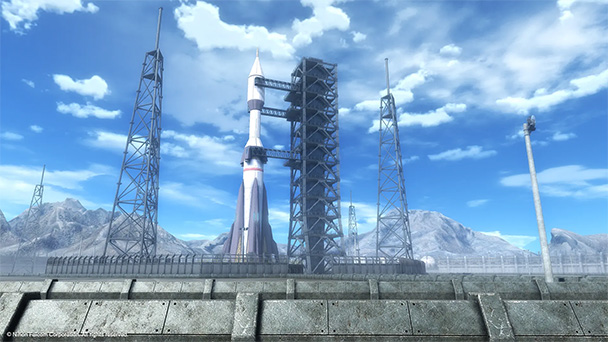
The central storyline revolves around Zemuria on the brink of irreversible change. Once a miracle that improved daily life, rapid advances in orbal technology now threaten to outpace human ethical frameworks. Fascinatingly, the narrative repeatedly asks whether progress is something societies control, or something that controls us, in return.
This theme of technological determinism runs through nearly every major plotline, as characters grapple with inventions that promise stability while quietly eroding autonomy and tradition (much like the expansion of the Imperial Railway Network allowed the government to project authority into previously semi-autonomous regions in the Erebonia arc).
Progress and the Point of No Return
But rather than framing technology as either villainous or heroic, beyond the Horizon takes a more nuanced approach. Innovations enable communication, medical breakthroughs, and military deterrence, but they also centralize power in the hands of corporations, intelligence agencies, and shadowy research organizations. The game excels at dramatizing this tension through personal stakes, showing how ordinary lives are reshaped and sometimes even broken, by decisions made far above them. And given the current world events, I can’t think of a thesis in gaming that’s more relevant.
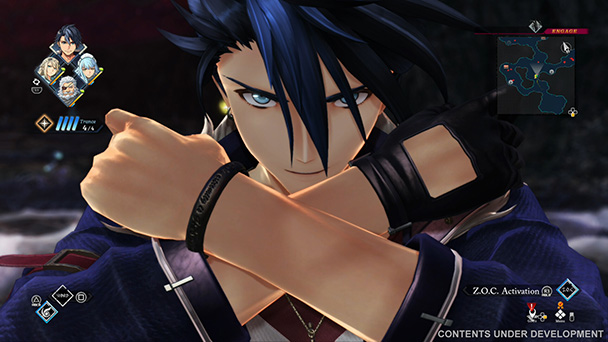
Like Trails into Reverie’s trio of routes, beyond the Horizon’s structure is split. The main route is given to Daybreak I and II’s Van Arkride, while Cold Steel’s Rean Schwarzer and Trails in the Sky’s Kevin Graham share the spotlight for parallel storylines. Save for a brief coalition for some dungeon crawling in a VR dungeon, you’ll rotate between the leads. While some will long for additional shared moments (which will undoubtedly come when the next entry closes out the Calvard arc), this approach allows the story to explore the global crisis from sharply contrasting viewpoints. This reinforces the recurring notion that no single character’s perspective can truly capture the truth of the continent’s trajectory.
The Rashomon Effect Once More
This multi-lead structure also influences the game’s pacing and tone. Chapters vary significantly in scale, from intimate character-driven investigations to sweeping political maneuvers involving entire nations. While this can sporadically feel uneven, it ultimately strengthens the narrative by preventing any one perspective from dominating. The sense that history is being written collaboratively and contentiously by many different characters is one of the series’ greatest strengths.
Exploration remains a pleasure for longtime fans, but beyond the Horizon strengths its trademark environmental storytelling. Cities like Edith’s outer districts and border towns influenced by Calvard’s corporate sprawl reflect class differentiation, with NPC behaviors changing based on political developments or technological occurances. Characters reference new surveillance infrastructure, labor displacement caused by automation, or the sudden influx of orbal-powered conveniences, often revising their dialogue multiple times across a single chapter.
Optional sidequests mirror these tensions on a human scale, with displaced workers retraining for new industries, mediating disputes between traditional guilds and tech-backed firms or investigating how local councils struggle to keep pace with corporate interests. Even mundane errands reinforce the idea that Zemuria’s social structure is being reshaped in real time. And while previous entries have touched on this, I’ve never seen such sociological nuance in any video game before.
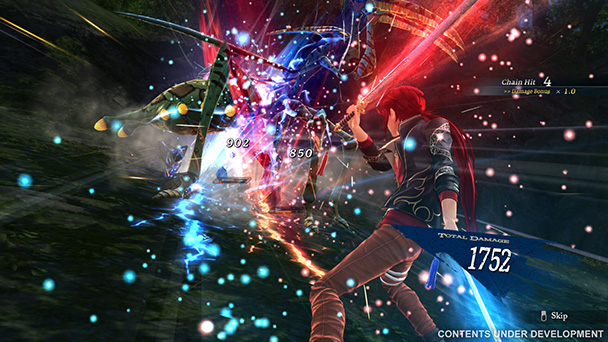
Some Ideological Crossfire in the Turn-Based Combat?
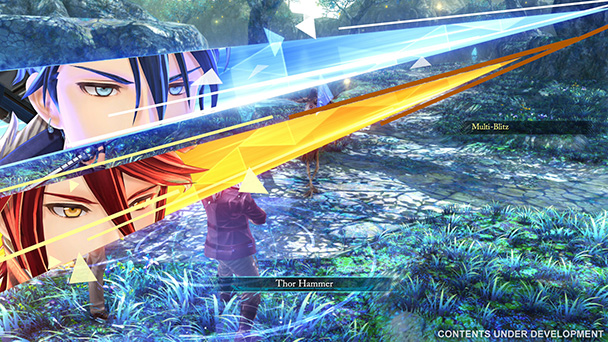
Combat builds upon the already refined turn-based systems of recent Trails entries, particularly Trails Through Daybreak II, while layering in mechanics that reward cross-arc cooperation. The revamped shard system allows abilities from different combat philosophies, bracer agility, Erebonian martial discipline, and Calvardian tactical pragmatism, to interact in cool ways.
New dual- and tri-character link attacks trigger based on personality contrasts as much as positioning,make for an interesting inclusion. Boss encounters frequently exploit this design by forcing players to adapt party composition mid-fight or respond to enemies who manipulate battlefield conditions with advanced orbal tech. While the default difficulty remains accessible, higher settings test mastery of delay management, status effects, and turn usage, ensuring veterans can still find depth beneath the spectacle.
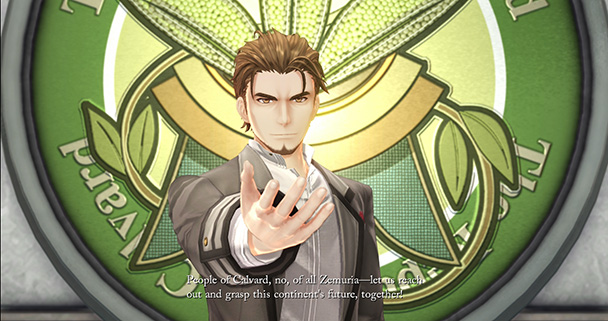
Growth Through Regret, Resolve, and Empty Quartz Slots
Character growth unfolds through both narrative consequence and mechanical progression. Expanded skill trees allow granular specialization, Van can favor evasive burst damage or crowd control, while Rean’s options reflect the lingering tension between restraint and overwhelming force. Equipment customization, particularly through advanced quartz synthesis, encourages experimentation rather than basic optimization.
Narratively, bonding events go beyond light character moments, often revisiting unresolved guilt, reservation, or the fallout from decisions made as far back as Trails in the Sky and Cold Steel. Kevin Graham’s storyline, in particular, interrogates the moral cost of institutional secrecy, while Rean must confront how Erebonia’s technological militarization stretches beyond its physical borders. These moments give longtime fans emotional resonance that will linger long after the credits roll.
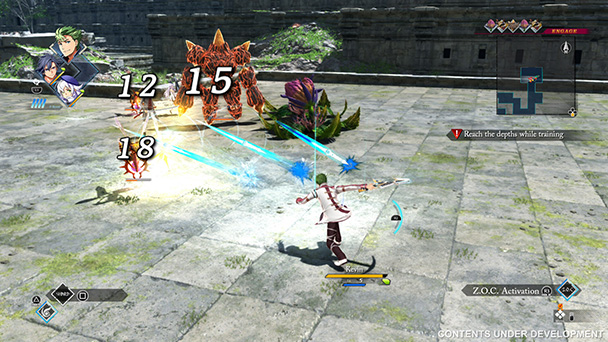
An Unfinished Ending for an Uncomfortable Question
The Legend of Heroes: Trails beyond the Horizon is less concerned with tying off every plot thread than with scrutinizing the direction Zemuria is hurtling toward. Fascinatingly, the game questions whether progress, once accelerated beyond human governance, can still be guided by empathy and restraint, which feels amazingly relevant given our obsession with artificial intelligence.
Rather than delivering simple cameos or humdrum fanservice, Horizon brings together arcs that depict anxieties about power, responsibility, and unintended consequences. As such, the game stands as one of Falcom’s most contemplative works, while still feeling cohesive. Sure, it may be ambitious to the point that it can flirt with unwieldiness, but Horizon’s willingness to wrestle with uncertainty makes it a rewarding experience, and a meditation on what progress truly means.
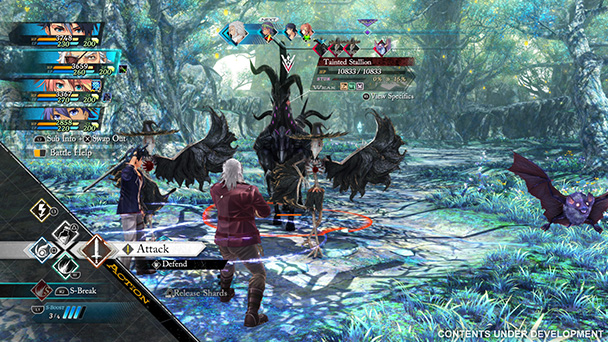
The Legend of Heroes: Trails beyond the Horizon was played
on PC with review code provided by the publisher.
Overview
GAMEPLAY - 85%
CONTROLS - 75%
CONTENT - 95%
AESTHETICS - 90%
PERFORMANCE - 90%
VALUE - 95%
88%
Great
Trails beyond the Horizon feels like Falcom finally stepping back to ask what twenty years of lore, politics, and progress have actually added up to, and just how much of it is still under human control. It’s dense, occasionally unwieldy, but deeply rewarding, using its multi-hero structure and evolving world to turn a long-running JRPG saga into a rewarding rumination on power, technology, and the costs of moving forward.


Why did I think this was the end of the Calvard arc? I forgot what site misinformed me.
Know that this ends on a cliffhanger is a bit disappointing.
What’s the price, $49.99 or $59.99?