Mr. Sleepy Man review
Banjo Kazooie Meets a Dose of Extra Strength Benadryl

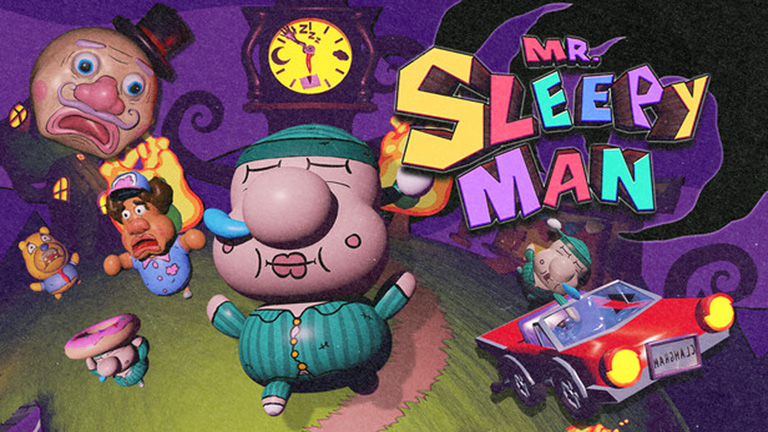
You have not played a 3D platformer as delightfully bizarre as Mr. Sleepy Man, a game that was six years in the making. Initially, solo developer Devin Santi’s protagonist finds himself in front of a giant Nintendo 64-looking console, requiring the small and exhausted lead to pick up a cartridge to start a game. With that, you’re whisked away to Bedtime Town, where everything feels like the last five minutes of consciousness before sleep takes hold.
From there, Mr. Sleepy Man hands you a sandbox, points vaguely at the plum-hued horizon, and trusts you to figure out the rest. There are over 350 objectives scattered across the game’s interconnected levels, a cast of NPCs that operate by their own ideocratic logic. Best of all, this doesn’t seem like an attempt at eccentricity. Instead, Mr. Sleepy Man feels like an expedition into an absurd world that Santi stumbled rather than created.
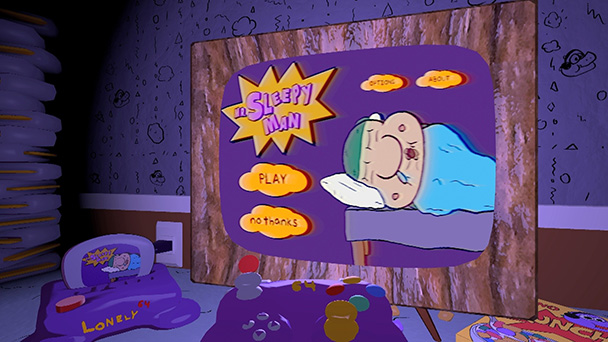
Press Start, Then Hit Snooze
What makes the absurdity work is that it’s not just random nonsense pasted over a generic story. Characters speak about everything from their hopes and ambitions to the stresses associated with insomnia. Nearly every NPC in Bedtime Town has a unique voice, and the game commits so faithfully to this surreal tenor that even a throwaway line can feel like a punchline or a threat. A sleepy shopkeeper might casually mention transcending dimensions in the same breath as asking you not to leave crumbs on the carpet, and it somehow feels perfectly natural.
Remarkably, the structure of the game is more of a dream diary than traditional checklist. Mr. Sleepy Man doesn’t so much guide you as it does point in general direction and mumble something semi-coherent about “the thing behind the thing behind the moon.” You’ll spot a weird sign, follow it to a rooftop, get distracted by an NPC arguing with a vending machine, and suddenly stumble into a new objective you didn’t know existed. Yes, the campaign has goals, but they’re often buried under ambiguity, environmental curios, and other absurdities. Progress can feels like uncovering secrets in a game that you barely understand. That can be exhilarating when it works however, it’s a bit irritating when it doesn’t. Undoubtedly, Santi doesn’t want you to play Sleepy Man like a traditional platform but get lost in its dreamlike bedlam and you can’t fault the game for trying something different.
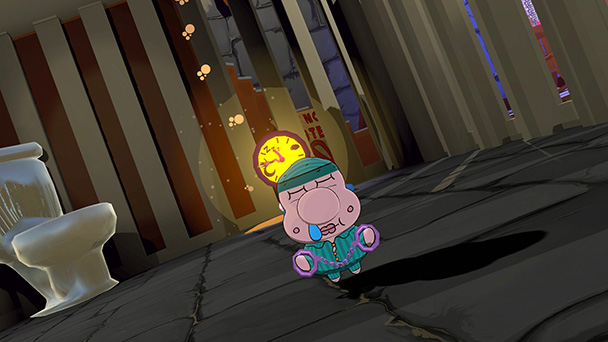
Following the Muddled Trail of Dream Logic
Unsurprisingly, the lack of direction is both Sleepy Man’s definitive style as well as its prickliest edge. On one hand, the open-world autonomy fits the tone perfectly. This is a game about being barely awake, wandering through familiar places that feel contorted, and trying to remember what you were supposed to be doing in the first place. On the other hand, there are stretches where the dream logic tumbles toward tedium. Without giving too much away, you might repeatedly loop around the same area, certain that you’re missing something obvious. Much later, you’ll find that the solution hinged on talking to one specific NPC or carrying a random object to a place that the game never explicitly calls out.
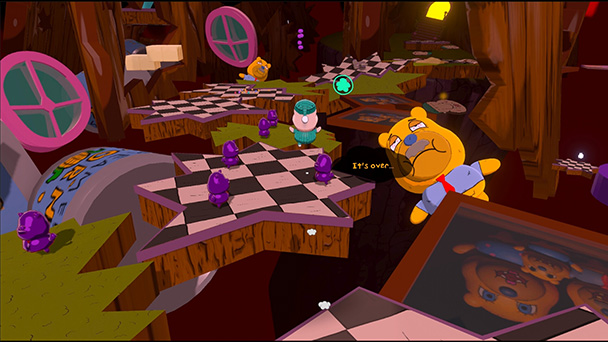
Floating Through Platforming Like a Lucid Dream
That said, when Sleepy Man’s systems align, the game can be magic. Platforming feels remarkable responsive, with jumps, floats, and dives that make exploration feel effortless. Meanwhile, combat is mercifully light, more of a deviation than centerpiece. Most encounters are less about defeating enemies and more about causing chaos in Bedtime Town, offering a nice respite from defeating legions of homogenous foes. Interesting, NPCs will remember your mischief, reacting when you return. Luckily, you aren’t doomed to become a drowsy outcast thanks to a Majora’s Mask-style reset.
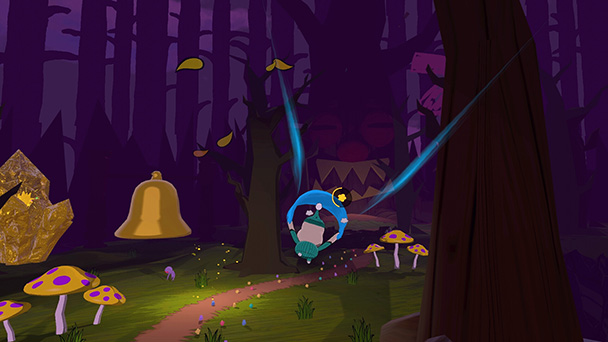
Visually, Mr. Sleepy Man renders its dreamworld with a retro aesthetic, but with an uptick in fidelity. Low-poly geometry and chunky textures evoke the N64 era without feeling like a replica, and Bedtime Town feels handcrafted rather than mimicked. Little details like the yellow glare emitting from windows and a clock tower or an ever-present moon right out of Georges Méliès’ Le Voyage dans la Lune evoke a world that’s removed from wide-awake lucidity.
Don’t Wake Me Up. This Dream’s Too Weird to Not Enjoy
Overall, Mr. Sleepy Man is less of a traditional platformer and more like wandering through someone else’s half-remembered dream. The sporadic lack of direction and intermittent bouts of aimlessness won’t work for everyone, but players who are willing to embrace the game’s peculiar personality will discover a world bursting with unconventional characters, odd humor, and real creativity.
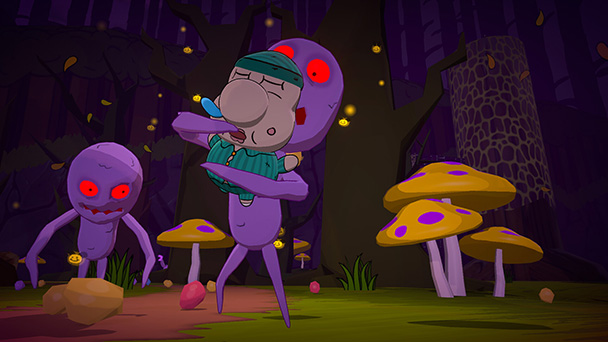
Devin Santi’s six-year experiment doesn’t always make sense, but that’s exactly the point. Mr. Sleepy Man invites you to explore and enjoy the unconventional logic of a place that straddles a space between being awake and asleep. When you stop trying to fully understand it and simply let the dream take control, Bedtime Town becomes a wonderfully weird place to spend your hours. Don’t sleep on it.
Mr. Sleepy Man was played on PC with review code provided by the publisher.
Overview
GAMEPLAY - 75%
CONTROLS - 75%
CONTENT - 80%
AESTHETICS - 75%
ACCESSIBILITY - 65%
VALUE - 75%
74%
GOOD
Mr. Sleepy Man is a wonderfully strange 3D platformer that trades clear direction for dreamlike wandering, letting players stumble through Bedtime Town’s surreal characters and oddball objectives at their own pace. It can occasionally feel like you’re sleepwalking in circles, but when its bizarre humor and freeform exploration combine, the result is a dream worth drifting through.