Demeo x Dungeons and Dragons: Battlemarked review
Crits, Clutches, and Minor Complications

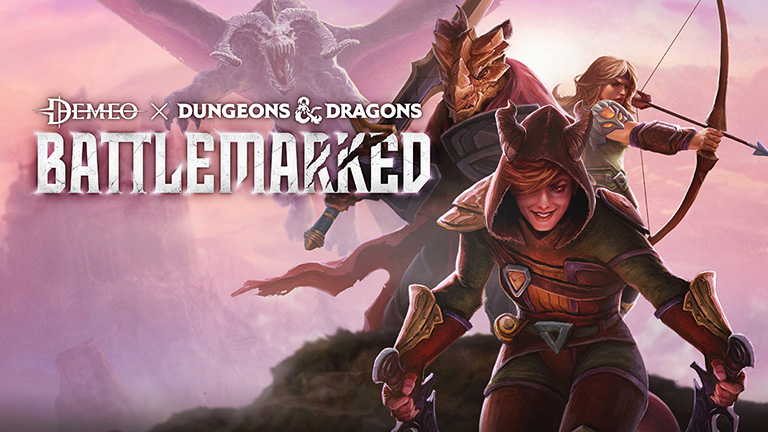
When Resolution Games’ released Demeo in 2021, the game felt like a welcome homage to tabletop dungeon crawling. The game’s recreation of miniatures, dice rolls, and turn-based tactics stripped away intimidating elements like having to study complex rulebooks. In its place was a wonderfully tactile, almost toybox-like experience as adventures moved through digital dioramas.
This foundation of accessibility, bite-size campaigns, and ability to accommodate multiplayer parties made Demeo an ideal candidate for collaboration. As such, it’s not surprising to discover than Demeo x Dungeons and Dragons: Battlemarked builds on this capable blueprint. But here, a Wizards of the Coast collaboration ensures this isn’t another nonspecific high-fantasy romp.
Sorry, Pre-Gens Only
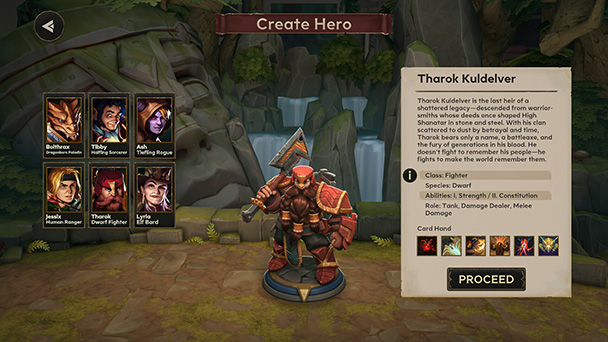
Demeo made a rather unconventional design decision not to let players generate their own party members. For better or worse, that remains the same with Battlemarked. So, instead of building a custom hero from a spreadsheet of stats, you’ll start by drafting from pool of six pre-built adventurers at the start of each run. While this choice keeps things moving, I can’t help but feel the method won’t sit well with players expecting comprehensive customization from a game bearing the Dungeons & Dragons moniker.
But soon enough, you’ll discover that this choice emphasizes Demeo’s dedication to brisk pacing. Any spots not taken by humans in filled to make a four-member adventuring party. The team is formulated to provide class balance, customarily filling your roster with a trio culled from a tanky melee fighter, arrow-slinging ranger, and stealthy rogue who can teleport across the battlefield. Gratifyingly, if you want to hand-pick your own party, Battlemarked accommodates. But be warned that diversity is one of the best ways to avoid a disheartening downfall.
Party Up or Play Solo with a Strong Digital DM
While Battlemarked is playable solo, the game shines with cooperative play. Controlling multiple heroes by yourself can feel more like solving a puzzle than participating in a living adventure, and it lacks the chaos that erupts when your buddies make a reckless decision. The one potential sticking point for human-based groups is that Battlemarked delivers more narrative and dialog than your typical dungeon crawl. As such, make sure your mates have some patience for some of the voiced exposition between battles.
Largely, paying attention to the storyline shouldn’t be too hard, as Demeo x Dungeons and Dragons delivers a pair of modules: Embers of Chaos and Crown of Frost. Naturally, there’s plenty of iconic D&D flavor as your team explores cursed ruins, monster-infested strongholds, discovering the dark forces responsible for pulling the strings.
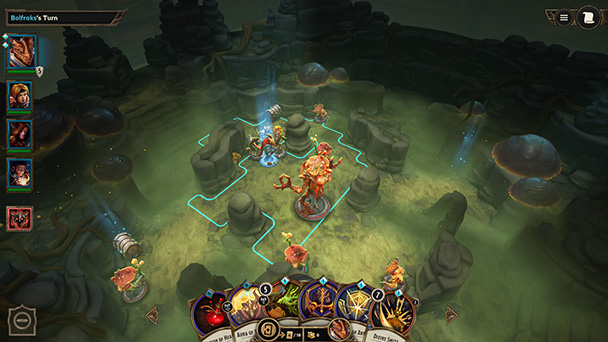
But Resolution Games is a skillful DM, delivering far more context than any of my schoolmates ever supplied. While Battlemarked probably isn’t as moving as a full blown sixty-hour RPG, it outshines most of its peers with accomplished writing and voice acting. Best of each, each successful run feels like a completed character in a broader legend and undoubtedly, I’d expect DLC to flesh things out even further.
Shuffling Decks, Not Skill Trees
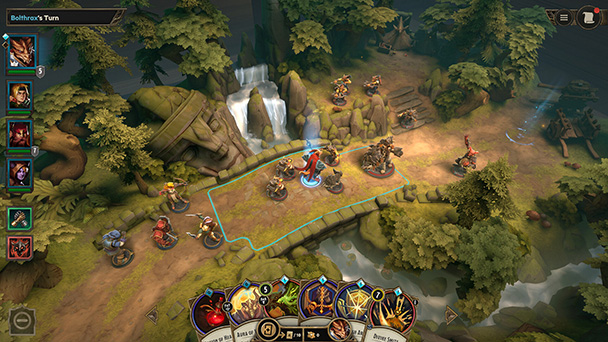
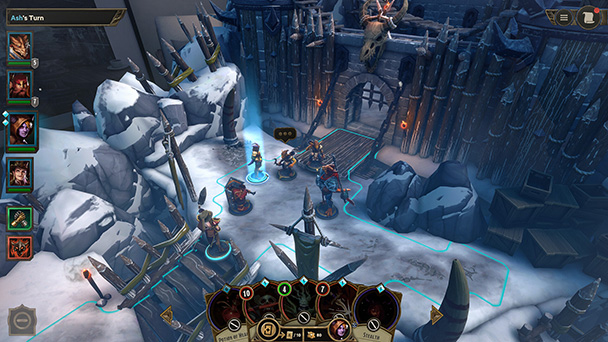
Undoubtedly, Battlemarked’s biggest strength is found in the card-based combat system, which replaces the genre’s ability trees with an ever-shifting hand of tactical options. Each hero comes with a unique deck that reflects their class identity. Tanks draw guard stances and shield slams, rogues harness movement tricks and backstab bursts, while spellcasters cycle through elemental blasts, buffs, and restorative healing.
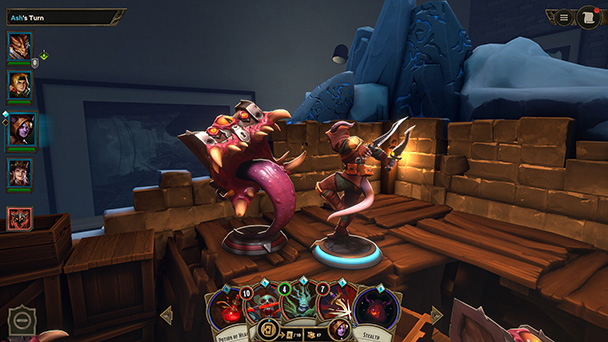
On your turn, you’ll spend two action points to play cards for movement, attacks, or skills, compelling players to constant adjust their strategies. One moment you might be pressing the offensive but when an unanticipated group of guardians spawn, you might have to reposition or conserves resources for an inevitable counterattack. Since your hand refreshes over time rather than completely resetting between encounters, there’s a persistent sense of momentum and risk that can mirror a real tabletop session.
Critical Successes and Maddening Misfires
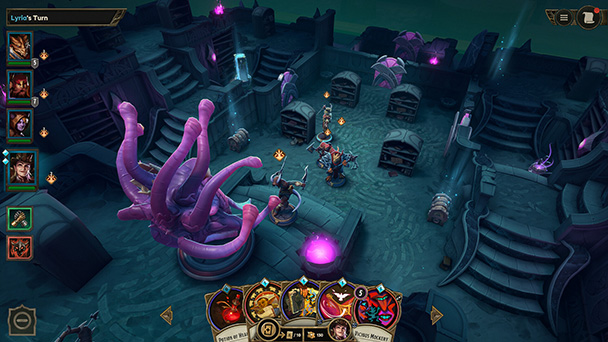
What makes Battlemarked’s combat so compelling is how well the game balances card clarity with improvisation. Card effects are capably communicated, highlighting potential areas-of-effect that can be easily read even when the arena is crowded with enemies. Yet the randomized cards and dice rolls that determine effectiveness introduce just enough uncertainty to keep veteran players from falling into routine play patterns. Critical failures can cause everything missing a last-ditch effort to causing friendly fire, creating variability across every encounter.
Upgrading cards between fights adds another strategic layer, letting you specialize builds over the course of a run. The result is a combat loop that feels succinct without sacrificing depth. Here, victory is less about executing a perfect plan and more about adapting on the fly when your carefully-laid strategy does south.
Demeo x Dungeons and Dragons does so many things well (and I haven’t even talked about VR support) that the game’s handful of issues are glaring. One of the biggest problems is the game’s camera. Typically, it gives you complete camera control, allowing you to zoom in and out and rotate to frame each encounter. But occasionally, your perspective can be blocked by a wall while in other moments the game just wouldn’t wrap around an environmental object. While unlikely, I did reach an impasse where my hirelings didn’t have a deck to properly battle a certain kind of spawning creature. To a lesser extent, the D20 rolls rely on dubious randomization. Maybe, it was just bad luck but the number of critical failures during one run was exceedingly high. And for many, the inability to level up your CPU-controlled party members will undoubtedly prove contentious.
Rolling a Nat 20 on Fun, Despite a Few Fumbles
Demeo x Dungeons & Dragons: Battlemarked succeeds not by recreating every single dice rolls of a traditional D&D campaign, but by distilling its adventure into a fast and replayable tactical experience. Despite frustrations with the camera and a few eyebrow-raising dice rolls, the game’s elegant card-based combat, confident storytelling, and spirited cooperative play captures what makes tabletop adventuring so satisfying. Whether you’re a longtime D&D veteran or a beginner drawn in by Demeo’s accessibility, Battlemarked demonstrates that rolling dice and saving the realm can be just as thrilling on a digital table.
Demeo x Dungeons and Dragons: Battlemarked was
played on PC with review code provided by the publisher.
Overview
GAMEPLAY - 80%
CONTROLS - 75%
CONTENT - 75%
AESTHETICS - 85%
PERFORMANCE - 75%
VALUE - 75%
78%
GOOD
Demeo x Dungeons & Dragons: Battlemarked swaps character sheets for card decks and delivers a brisk, highly tactical dungeon crawl that thrives on clever teamwork and fast decision-making. Its streamlined design, diorama-style visuals, and strong storytelling make every run gratifying, even if the camera, party leveling system, and fickle dice occasionally crit-fail your patience. That said, this is one digital adventure that routinely rolls with advantage.